English
 français
 Deutsch
 русский
 italiano
 español
 português
 Nederlands
 العربية
 日本語
日本語 한국의
한국의 Polski
 Tiếng Việt
 slovenský
 Indonesia



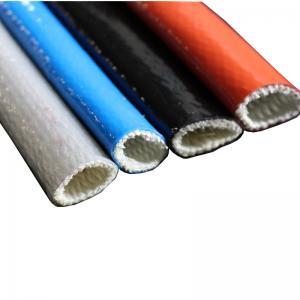
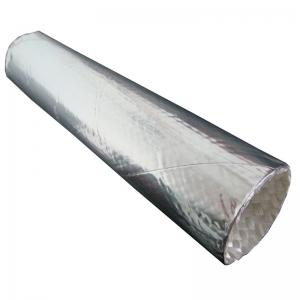
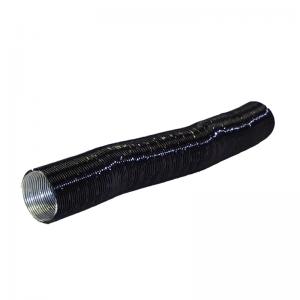
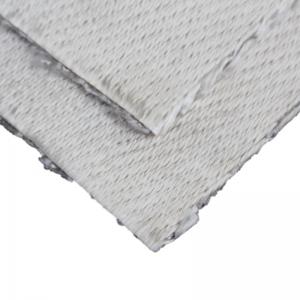
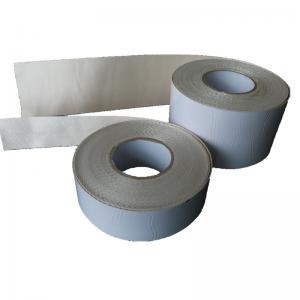
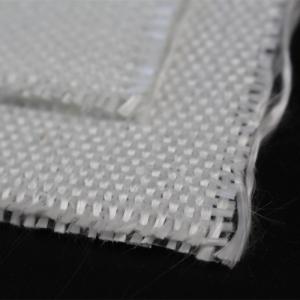
A fabric expansion joint for a steel mill must be specified for its exact position in the exhaust system. A connection near a furnace, a cooled extraction duct and a fan inlet may belong to the same process line, but they do not necessarily experience the same temperature, pressure, dust loading or movement.
Fabric expansion joints provide flexible connections in suitable low-pressure gas ducts. They accommodate specified thermal growth and equipment displacement while maintaining the required gas seal. In furnace exhaust service, the flexible belt, insulation, attachments and internal protection must work together as an assembly.
BSTFLEX manufactures custom non metallic fabric expansion joints for industrial ducting, hot-air, exhaust and flue-gas applications. Round, rectangular and project-specific configurations can be evaluated from customer drawings and operating data.
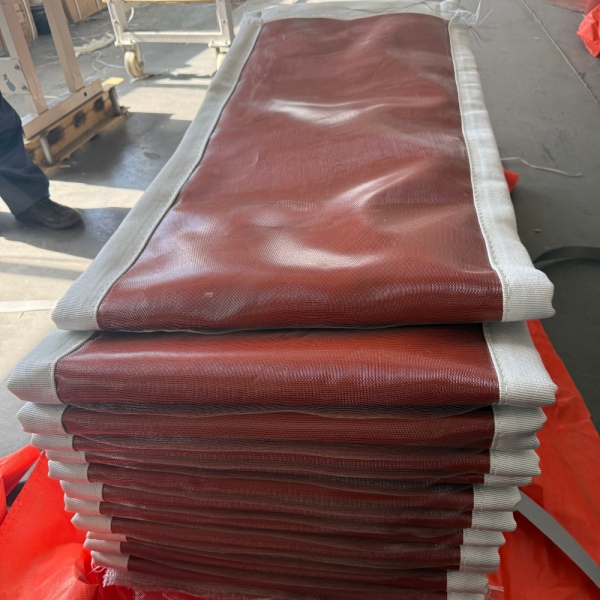
Where Fabric Expansion Joints Fit in Steel Plant Ductwork
The equipment name is the starting point, not the complete specification. Identify the connection on the plant drawing and explain what reaches it during normal operation, startup, shutdown and credible upset conditions.
| Duct Location | Conditions to Establish | Design Focus |
|---|---|---|
| Electric arc furnace extraction system | Exact location relative to cooling, dilution and dust-removal equipment | Confirm whether fabric construction is suitable at the proposed connection |
| Ladle furnace fume-extraction duct | Gas temperature, intermittent operation, dust and equipment movement | Match the joint to the stationary duct connection and specified movement |
| Reheating or heat-treatment furnace exhaust | Local exhaust temperature, operating cycle and external heat exposure | Thermal protection and repeated movement |
| Dust-collection and baghouse ductwork | Dirty-side or clean-side location, pressure and particulate conditions | Sealing, abrasion protection and pressure-related deformation |
| Fan inlet or outlet | Pressure fluctuations, vibration and available installation space | Control of belt flutter and clearance throughout movement |
| Waste-heat recovery duct | Connection temperature, equipment growth and process changes | Compatibility between the joint and adjoining equipment |
Electric Arc Furnace Exhaust Requires a Location-Specific Review
An electric arc furnace dedusting system can include water-cooled primary ducts, additional gas cooling, secondary fume extraction, filtration and induced-draft fans. These sections perform different functions and should not receive one generic expansion joint specification.
A fabric connector is not an automatic replacement for a water-cooled duct, a sliding connection or another component designed for direct furnace off-gas. The system designer must approve the proposed installation point and operating limits. The furnace process temperature is not a substitute for the measured or calculated gas temperature at that connection.
Likewise, a stationary duct expansion joint should not be assumed to accommodate furnace tilting, roof lifting or other large equipment travel unless that movement has been explicitly included in its design.
Thermal Cycling Matters as Much as Peak Temperature
For a furnace duct expansion joint, record how the temperature changes rather than providing only its highest value. A steady exhaust duty and a connection exposed to repeated temperature excursions can require different evaluations even when their maximum temperatures are similar.
Useful information includes normal operating temperature, maximum excursion temperature, excursion duration, heating and cooling frequency, and the corresponding duct movement. Avoid assuming that every furnace exhaust duct returns to ambient temperature after each production cycle.
A high temperature fabric expansion joint may use insulation and hot-face protection to keep its sealing materials within their intended operating range. The temperature capability belongs to the complete construction, not simply to the fabric with the highest published rating.
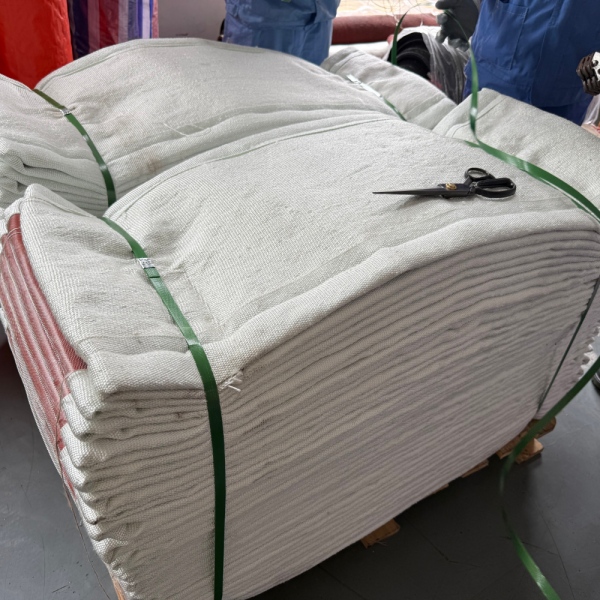
External Radiant Heat Is a Separate Design Input
The gas inside the duct is not the only possible heat source. A nearby furnace opening, hot equipment surface or heated product can expose the outside of the flexible element to radiation.
Report the joint's position, distance and orientation relative to nearby heat sources. Photographs of the surrounding equipment can help identify exposure that is missing from a duct-temperature specification.
Any proposed external shield or cover should be reviewed for heat dissipation, movement clearance and maintenance access. Do not assume that wrapping the entire joint in additional insulation will improve its performance.
For the relationship between process temperature, insulation and sealing-layer temperature, read high temperature fabric expansion joints for flue gas ducts.
Dust Protection Starts with the Flow Path
Where exhaust carries abrasive solids, a liner can protect the flexible belt from direct flow. An accumulation barrier addresses a different problem: particulate buildup in the joint cavity. Neither component should be treated as a substitute for the gas-sealing membrane.
Specify the particle conditions, flow direction and available velocity data. Include nearby elbows, dampers or section changes on the drawing. Review liner overlap and clearance throughout the required movement, not only in the shutdown position.
A thicker belt will not remove metal-to-fabric contact or restore movement space occupied by deposits.
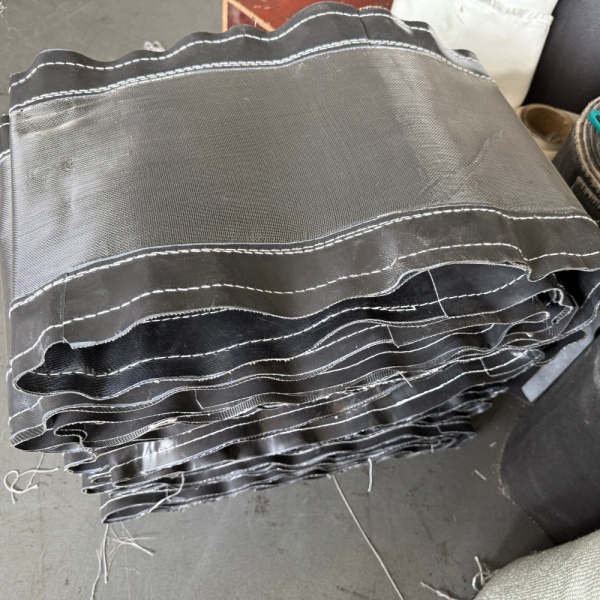
Negative Pressure and Fan Pulsation Need Separate Attention
Negative pressure can draw the belt inward; pressure fluctuations near fans or dampers can cause repeated flutter. Both conditions need assessment alongside joint geometry and internal clearance.
State operating and design pressure with its sign and units. Report known transients, vibration amplitude and frequency where available. Do not interpret visible flexibility as proof that the belt is operating within its design limits.
Low fabric spring force also does not mean zero loading on the surrounding structure. Pressure-related loads and support requirements remain part of the duct-system design.
Select Materials by Their Function in the Joint
The flexible element may need reinforcement, gas sealing, thermal protection and environmental resistance. These functions do not have to be provided by the same material.
Our guide to fabric expansion joint materials explains the different roles of PTFE, silicone, fiberglass and silica. The table below applies that distinction to furnace exhaust projects.
| Material or Component | Possible Function | What Must Be Confirmed |
|---|---|---|
| Fiberglass fabric | Textile reinforcement or insulation containment | Required mechanical properties and temperature at the layer |
| Silica fabric | High-temperature textile protection or insulation containment | Actual heat exposure, movement and need for a separate gas seal |
| Silicone-coated fiberglass | Flexible protective cover or sealing layer in a suitable construction | Coating temperature, gas compatibility and external exposure |
| PTFE coated fabric | Chemically resistant component in a specified barrier system | Grade, sealing performance, joining method and membrane temperature |
| Thermal insulation | Reduction of heat reaching temperature-sensitive layers | Thickness, containment and behavior during joint movement |
| Internal metal liner | Protection from direct flow and particle exposure | Material compatibility, attachment and clearance |
These are possible component functions, not a standard layer sequence or a declaration that every listed fabric is suitable for every steelworks application. Uncoated woven fabric should not be treated as a complete gas seal. A general-purpose coated fabric also requires confirmation of its suitability for the intended expansion joint construction.
BSTFLEX supplies a range of high temperature fabrics. For fabricated joints, specify the performance needed from the assembled belt and its seams rather than relying on fabric weight, thickness or coating name alone.
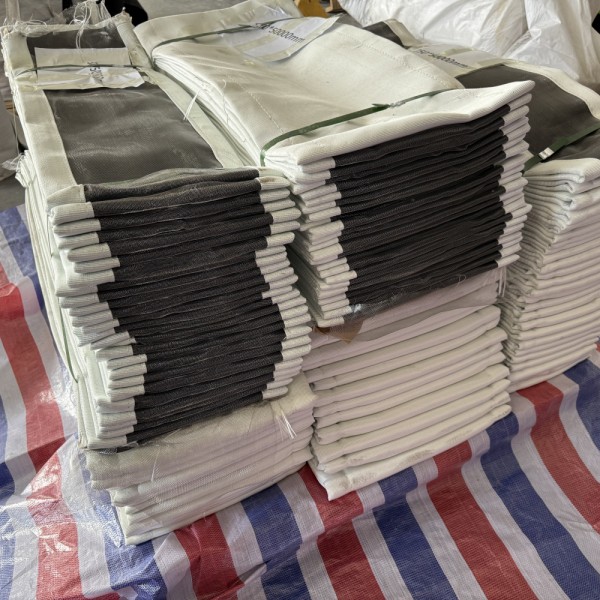
Round and Rectangular Ducts Need Different Dimensional Records
Steel plant exhaust systems use different duct geometries. Do not assume the opening is rectangular simply because the installation is large.
For round connections, identify the opening diameter, attachment diameter, flange details and hole-pattern orientation. For rectangular connections, record width, height, corner geometry and the relevant dimensions at both ends.
Keep the installed connection distance separate from the developed width of the fabric belt. Clamping areas and the free flexible portion must be accounted for in the approved design.
For large rectangular connections, our article on rectangular fabric expansion joints for industrial ductwork covers corners, attachment geometry and liner clearance in more detail.
Specify Movement from an Agreed Installation Position
The movement requirement should identify axial compression and extension separately, lateral displacement in both transverse directions, and angular movement about defined axes. State which movements occur simultaneously.
An intentional cold preset is different from unexpected installation misalignment. Both need to be recorded so that the manufacturer understands the starting position and the movement required during service.
Ask the duct-system engineer to establish the operating displacement. Do not estimate a joint's movement capability from the looseness of an existing belt. Confirm that liners, insulation components and surrounding structures remain clear throughout the approved movement envelope.
Replacement Should Address the Failure, Not Just the Dimensions
A repeat order is straightforward only when the previous specification remains appropriate. Before replacing a steel plant expansion joint, collect its service history, photographs, dimensional records and any process changes since installation.
Record observations rather than assuming a cause. Wear beside a liner, tearing at a clamp, deposits inside the cavity and localized discoloration call for different investigations. A higher-temperature fabric will not necessarily resolve damage caused by contact, misalignment or restricted movement.
For the survey and ordering procedure, see replacement fabric expansion joints: how to measure and specify an existing joint.
Hands-on inspection and disassembly must be performed by authorized personnel under the site's isolation, safe-access and permit procedures. Confirm safe temperature and pressure conditions, adequate duct support and any contamination hazards before disturbing the joint. Do not loosen an operating exhaust connection.
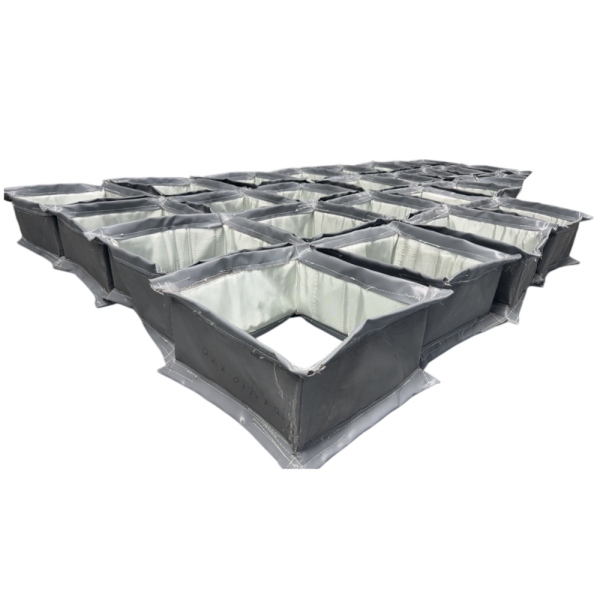
Engineering Information for a Steel Mill Expansion Joint Quote
Prepare one specification for each equipment tag. Mark missing information as unknown rather than assuming that all joints on the same exhaust line have identical requirements.
| RFQ Item | Information to Provide |
|---|---|
| Equipment and location | Joint tag, furnace or exhaust system, and position relative to cooling, filtration and fans |
| Connection geometry | Diameter or width and height, attachment details, installation distance and drawing references |
| Temperature | Normal, design and excursion temperatures, excursion duration and operating cycles |
| External heat | Nearby radiant sources, existing shields and external insulation |
| Pressure and vibration | Positive or negative values, units, design limits, transients and available vibration data |
| Process medium | Gas composition, moisture, condensate and cleaning exposure where relevant |
| Dust and flow | Particle conditions, gas velocity, flow direction and nearby duct disturbances |
| Movement | Cold reference position, preset, axial compression and extension, lateral and angular requirements |
| Internal components | Liner arrangement, insulation, accumulation barrier and components proposed for reuse |
| Supply scope | Belt only, belt with accessories or complete assembly; quantity, access limits and required delivery date |
Custom Manufacturing and Shutdown Planning
BSTFLEX supports drawing-based manufacture of flexible belts and custom assemblies for industrial duct applications. As a fabric expansion joint manufacturer, we evaluate the requested geometry, material construction and supply scope from the information provided for the project.
For shutdown replacements, distinguish the flexible element from any frames, liners, insulation and clamping components. Agree on whether the belt is supplied open or closed, how any site closure will be completed, and which parts are included in the quotation.
Resolve dimensional differences and missing operating data before approving fabrication. The final drawing should identify the installation reference, movement requirements, material construction and connections to retained equipment.
Request a Fabric Expansion Joint for Furnace Exhaust Ductwork
For a new steel mill exhaust line or a replacement connection, send BSTFLEX the equipment location, drawing and operating conditions. Product configurations and customization options are available on our custom fabric expansion joint page.
A useful inquiry includes the duct dimensions, normal and maximum temperature, pressure, gas and dust conditions, movement, external heat exposure and required supply scope. Replacement requests should also include photographs, service history and the planned outage window.