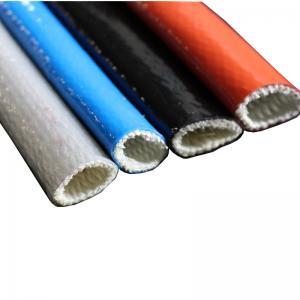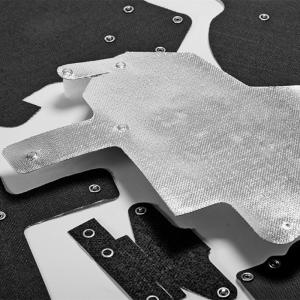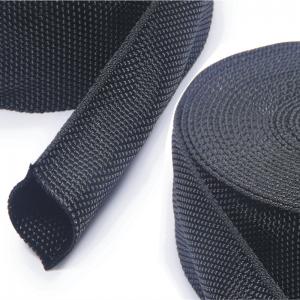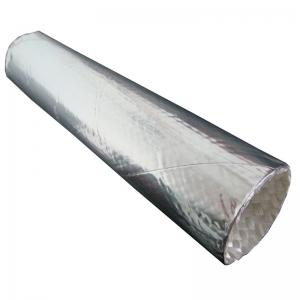
Silicone coated fiberglass fabric for expansion joints should be specified by its position in the assembly, the temperature at that layer, the process medium, pressure conditions and movement requirements. Fabric thickness and coating sides belong in the specification, but neither can establish the performance of the finished joint.
A request for "silicone fiberglass cloth for a hot duct" leaves several purchasing decisions unresolved. Is the buyer ordering roll material for fabrication, a replacement flexible belt or a complete connector? Will the silicone face contact the process gas, or will it form an external cover behind other protective layers?
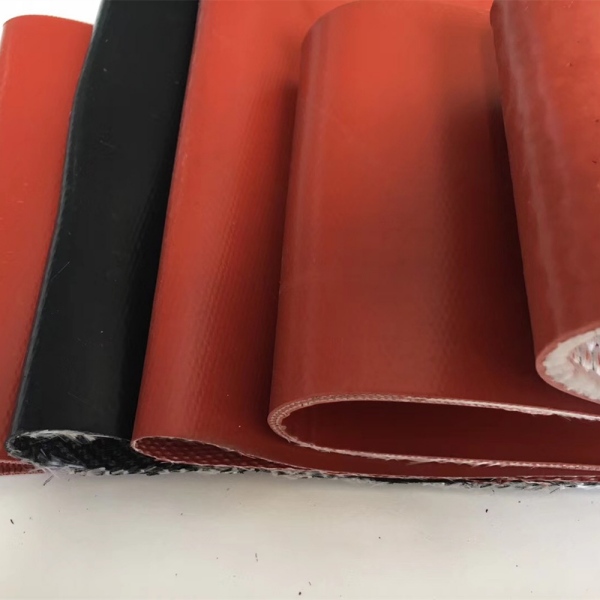
BSTFLEX supplies silicone coated fiberglass fabric for industrial fabrication and non-metallic fabric expansion joints for application-specific duct connections. Establishing the supply scope and operating conditions first makes the resulting quotations easier to compare.
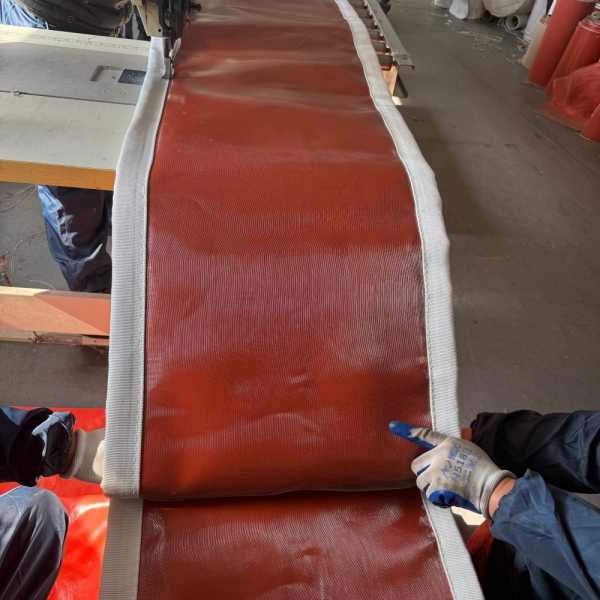
Silicone coated fiberglass can be considered for suitable hot-air connectors and as an outer cover in a composite expansion joint. These are different duties. A material exposed directly to the air stream must meet that exposure, while an external cover must be selected for the conditions that actually reach it.
Ask the designer to identify the proposed cloth on a cross-section drawing. Is it the flexible wall, an outer protective ply or part of a qualified sealing construction? An insulation layer reduces heat transfer; a chemical barrier protects against the medium; an outer cover addresses external exposure. Do not assume one coated cloth performs all three functions.
For background on the substrate and coating, see What Is Silicone Coated Fiberglass Fabric and Where Is It Used?
Provide the normal gas temperature, design temperature and any short-duration excursion, including its duration and expected frequency. Separately identify the temperature expected at the silicone-coated layer. When that value is unknown, request a thermal review rather than assigning the gas temperature to every layer or assuming the outside remains cool.
The selected grade's finished-fabric rating must govern its use. A temperature quoted for bare fiberglass does not establish the allowable temperature of the silicone coating, a fabricated seam or a complete expansion joint.
Include ambient conditions, nearby radiant heat sources and the proposed insulation arrangement in the review. Do not add external insulation or an enclosing weather cover without the joint designer's approval: changing heat dissipation can change the temperature at the flexible element and its attachments.
Clean hot air and wet industrial flue gas are not interchangeable environments. Silicone's weather resistance should not be interpreted as general resistance to corrosive flue-gas constituents. A silicone outer cover may be appropriate while a different material provides the process-side chemical barrier.
Send the gas composition or available process analysis, moisture conditions, expected condensation, dust loading and gas velocity. Include cleaning or washdown exposure and the conditions during startup and shutdown, not only stable operation.
Where acid condensation or aggressive chemicals are possible, ask the supplier to confirm the barrier construction against the specific medium. Do not approve substitution of one coated fabric for another on temperature rating alone. A change in coating chemistry can require a different seam, laminate or overall layer arrangement.
Provide axial compression and extension separately, lateral displacement in the relevant directions, and angular or torsional movement where applicable. Mark the cold installation position and operating positions on the drawing. State which movements occur together and how often the joint cycles.
Fabric tensile strength is not a movement allowance. The joint's available flexible span and installed geometry must accommodate the specified displacement. Do not assume that separately quoted maximum axial and lateral movements are available simultaneously.
State normal pressure, design pressure and any negative-pressure condition with explicit units and a clear gauge or absolute reference. Identify pressure reversals, fan-related pulsation and other transient conditions.
Negative pressure can pull the flexible element toward internal components; pressure fluctuations can cause repeated flutter. These conditions require an assembly review, not simply a heavier coating. The designer should assess the material, clearances and need for flow protection together.
Once the service conditions are established, request the following information for the proposed silicone coated fiberglass cloth. Record the accepted values, tolerances and test methods on an agreed specification rather than relying on a general product description.
| Specification item | What to request |
|---|---|
| Material identification | Grade or material code, specification revision and identification of the approved reference sample. |
| Fiberglass base | Base fabric construction, weave, yarn type where relevant, and uncoated fabric weight. |
| Finished thickness | Nominal thickness, agreed tolerance and measurement method. |
| Coating configuration | Single-side or double-side coating, identification of each face and required installation orientation. |
| Coating and total weight | Cured silicone coating weight per face and finished fabric weight, with units and tolerances. |
| Mechanical properties | Relevant tensile and tear requirements in both fabric directions, with test methods and acceptance values. |
| Coating integrity | Agreed adhesion, surface-defect and flexing requirements appropriate to the application. |
| Service qualification | Applicable temperature and chemical-compatibility information, including any agreed aging or conditioning requirements. |
| Usable dimensions | Usable roll width, roll length, edge allowance and restrictions on joins or defects. |
| Delivery records | Required inspection documents, batch identification and confirmation of any deviations from the purchase specification. |
Do not use finished weight as a substitute for coating weight. It does not reveal how much of the material is fiberglass or how the silicone is distributed between faces. Similarly, the words "double-side coated" do not confirm equal coating weights on both sides.
Compare samples against the complete specification. A similar color, thickness or surface feel is not enough to approve an alternative expansion joint fabric.
A fabric test and a finished-joint test answer different questions. Even when a material meets a specified barrier requirement, the completed connection still includes seams, splices, bolt holes and clamped interfaces.
Where leakage matters, define an acceptable leakage criterion and the agreed test medium, pressure differential, duration and test scope. Avoid an undefined requirement such as "100% gas-tight." Confirm whether the evidence concerns a flat specimen, a fabricated seam or the assembled joint.
Specify the joining method for the selected coating system. A sewn connection must not be assumed gas-tight without a suitable sealing design and verification. Identify splice locations, cuff details, hole preparation and attachment requirements on the fabrication drawing. Use the manufacturer's assembly instructions rather than a generic fastening procedure.
Send details of the flow liner, attachment flanges, clamping bars and nearby obstructions. In dusty or abrasive service, the liner arrangement may be essential to protect the fabric from direct exposure. Its clearance must remain adequate as the joint moves.
For a replacement, photograph the damaged area before removing the old belt. Record whether the damage is concentrated near a clamp, corner, splice or internal liner. A tear at a contact point should prompt inspection of the surrounding geometry; changing fabric thickness alone may leave the cause untouched.
For rectangular joints, include corner details rather than supplying only width and height. For any shape, distinguish the installed face-to-face gap from the developed fabric width. The replacement dimensions should be checked against the metalwork and approved design, not taken solely from a distorted used belt.
Roll material: identify the fabric specification, usable width, required length and fabrication responsibility. The order should make clear that the buyer or appointed fabricator is responsible for converting the material into the approved joint construction.
Replacement flexible element: define the belt or flanged configuration, dimensions, layer arrangement, splice requirements and whether it must be supplied open for site joining or as a closed element.
Complete expansion joint: list the required flexible element, insulation components, liner, frames, clamping hardware and documentation. State which existing components will be reused and which are included in the quotation.
These supply forms should not be compared as though they were the same product. A lower fabric price does not establish a lower installed cost when fabrication, sealing and qualification remain outside the offer.
Ask which data are typical values and which are guaranteed acceptance limits. Agree on the inspection plan before the purchase order is finalized, including sampling, dimensional checks, relevant material tests and any required witness points.
For a new construction or material substitution, consider a representative fabrication sample. Where thermal aging, chemical exposure or repeated movement is important, agree on suitable conditioning and evaluation with the designer. Establish whether the evidence applies to the proposed grade, the seam construction or the complete assembly.
Request the applicable technical data sheet and required inspection records. A company quality-system certificate does not, by itself, establish a particular fabric's pressure rating, chemical compatibility or movement capability. Confirm those requirements through the relevant specification and qualification evidence.
Not universally. Select the coating configuration according to the exposure on each face and the approved joint construction. Two coated faces do not automatically provide a higher temperature rating, pressure rating or movement allowance.
Do not assume it can. Suitability depends on the actual gas and condensate chemistry as well as temperature. Silicone may serve as an external cover while another qualified material provides the process-side barrier. Direct exposure requires confirmation for the specific service.
There is no universal expansion-joint fabric thickness. Request a grade against the required layer function, fabrication geometry and operating duty. Review base cloth, coating weight, mechanical properties and relevant qualification data together.
The names can cover different duties. Match the actual temperature, medium, pressure and movement requirements before making a substitution. A material specified for one air-handling connection is not automatically suitable for another industrial duct joint.
For roll material, send BSTFLEX the required silicone coated fiberglass fabric specification, intended layer position, width and quantity. Include the joint drawing and operating conditions when the material grade has not yet been selected.
For a replacement belt or complete assembly, provide the duct dimensions, attachment details, temperature, pressure, gas composition and movement requirements for a custom fabric expansion joint review. Other material families can be compared through the high temperature fabric range.
Contact BSTFLEX for material selection, sample requirements and a project quotation. State whether the inquiry covers cloth, a fabricated flexible element or a complete joint so the offer addresses the correct scope.

 English
 français
 Deutsch
 русский
 italiano
 español
 português
 Nederlands
 العربية
 日本語
日本語 한국의
한국의 Polski
 Tiếng Việt
 slovenský
 Indonesia