sipariş (moq):
1
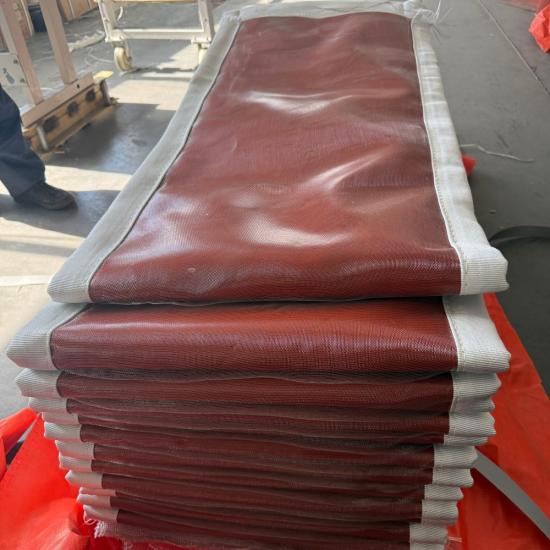
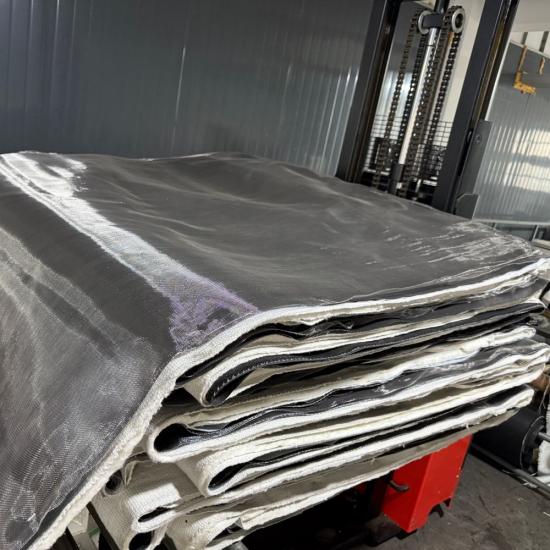
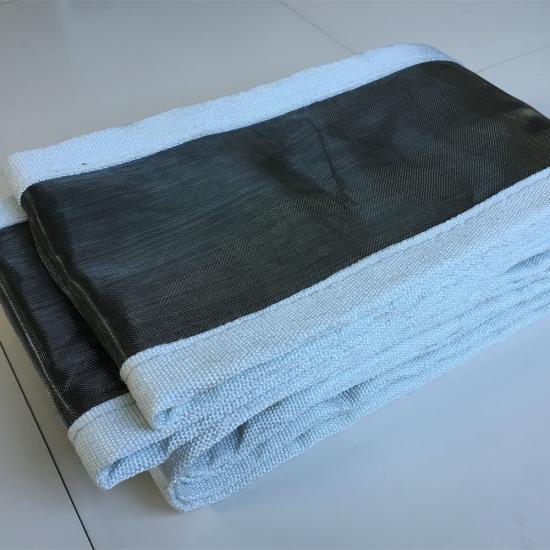
BSTFLEX Metal İçermeyen Kumaş Genleşme DerziBu, endüstriyel havalandırma kanalları, sıcak hava, egzoz ve baca gazı sistemlerinde, termal genleşme, titreşim, ekipman hareketi veya montaj hizalama sorunlarının, bitişik kanal ve ekipmanlara aşırı yük aktarmadan karşılanması gereken durumlarda kullanılmak üzere özel olarak tasarlanmış esnek bir bağlantı elemanıdır.
Sert metalik bileşenlerin aksine, birkumaş genleşme derziÇalışma sıcaklığına, gaz bileşimine, basınç koşullarına, hareket gereksinimlerine ve çevresel koşullara göre seçilen bir veya daha fazla esnek tekstil, kaplamalı kumaş, sızdırmazlık ve yalıtım katmanı kullanır. Esnek eleman, iki kanal bölümü arasında kontrollü bir bağlantı sağlarken eksenel, yanal ve açısal yer değiştirmeyi karşılayabilir.
BSTFLEX yuvarlak, dikdörtgen, kare ve uygulamaya özel ürünler üretmektedir.metal olmayan genleşme derzleriOEM ekipman üreticileri, havalandırma sistemi yüklenicileri, enerji üretim sistemleri, çimento fabrikaları, çelik işleme ekipmanları, endüstriyel fırınlar, havalandırma sistemleri ve diğer yüksek sıcaklık proses tesisleri için.
| Ürün | Metal Olmayan Kumaş Genleşme Derzi |
| Alternatif İsimler | Kumaş Genleşme Derzi, Kumaş Kanal Genleşme Derzi, Kompozit Kumaş Genleşme Derzi, Metal Olmayan Kompensatör |
| Yapı | Tek katmanlı veya çok katmanlı esnek yapı |
| Şekiller | Yuvarlak, dikdörtgen, kare ve özel geometriler |
| Hareket | Eksenel, yanal, açısal ve birleşik hareket |
| Tipik Medya | Sıcak hava, egzoz gazı, baca gazı ve endüstriyel proses gazları |
| Malzemeler | Sıcaklık, ortam, kimyasal maruziyet, aşınma ve mekanik gereksinimlere göre seçilir. |
| Boyut | Çizime veya montaj ölçülerine göre özel olarak üretilir. |
| Başvuru | Endüstriyel havalandırma kanalları, egzoz, fırın, kazan, fan ve proses havası sistemleri |
Ametal olmayan kumaş genleşme derziEndüstriyel havalandırma kanalları veya ekipmanlarının bölümleri arasına yerleştirilen esnek bir bağlantı elemanıdır ve aksi takdirde sistemde gerilime neden olacak hareketleri telafi etmek için kullanılır. Termal genleşme, hareketin en yaygın nedenlerinden biridir, ancak titreşim, ekipman yer değiştirmesi, imalat toleransı ve yapısal hareket de kontrol edilmesi gereken unsurlar olabilir.
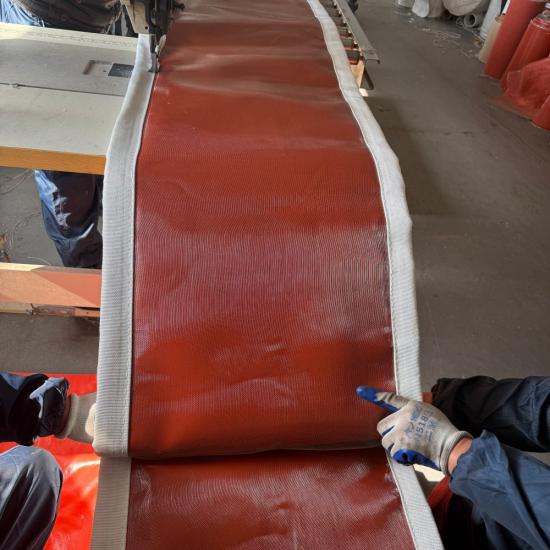
Esnek gövde, genellikle şekillendirilmiş metal körük yerine, özel olarak tasarlanmış tekstil ve kaplamalı kumaş katmanlarından üretilir. Kullanım koşullarına bağlı olarak, yapıda gaz sızdırmazlık membranı, takviye kumaşı, ısı yalıtımı ve iç koruyucu katman bulunabilir.
Bu yapı birkumaş genleşme derziÖzellikle geniş kanal kesitleri, sıcak gaz ortamları ve birden fazla yönde hareket gerektiren uygulamalar için uygundur.
Endüstriyel havalandırma kanalları, çalışma sıcaklığındaki değişikliklere bağlı olarak genleşir ve büzülür. Bu hareket tamamen kısıtlanırsa, termal gerilim kanal duvarlarına, flanşlara, fanlara, ekipman bağlantılarına ve destek yapılarına aktarılabilir.
Esnekkumaş kanal genleşme derziBu, bitişik bölümler arasında kontrollü bir hareket bölgesi oluşturur. Kanal genişledikçe, daraldıkça veya kaydıkça, esnek bölüm geometrisini değiştirir ve tüm yer değiştirmeyi sert bileşenlere zorlamaz.
Eklem geometrisine ve sistem tasarımına bağlı olarak, genleşme derzi şunları karşılayabilir:
Her endüstriyel genleşme derzi için uygun tek bir kumaş yapısı yoktur. Güvenilir bir tasarım, gerçek çalışma koşullarından başlar.
Çok katmanlı bir sistem, her biri farklı bir görevi yerine getiren çeşitli işlevsel katmanlar içerebilir:
Gaz sızdırmazlık tabakası, işlem ortamının muhafaza edilmesine yardımcı olur ve sıcaklık, gaz bileşimi, nem, kimyasal maruziyet ve basınç koşullarına göre seçilir. Uygulamaya bağlı olarak, kaplamalı fiberglas veya floropolimer bazlı malzemeler düşünülebilir.
Takviye katmanı, esnek elemana boyutsal stabilite ve mekanik destek sağlar. Gerekli mekanik ve termal özelliklere göre dokuma cam elyafı ve diğer teknik tekstiller seçilebilir.
Yüksek sıcaklık sistemlerinde, dış sızdırmazlık malzemelerine ulaşan sıcaklığı düşürmek için bir yalıtım katmanına ihtiyaç duyulabilir. Yalıtım kalınlığı ve malzemesi, gaz sıcaklığına, dış sıcaklık sınırlarına ve bağlantı geometrisine göre tasarlanmalıdır.
Genleşme derzinin yüksek gaz hızına, partikül maddeye veya aşındırıcı ortama maruz kaldığı durumlarda, esnek elemana doğrudan çarpma etkisini azaltmak için dahili bir koruyucu sistem veya akış astarı gerekebilir.
Malzeme seçimi, en önemli kısımlardan biridir.metal olmayan genleşme derzi tasarımıBSTFLEX çok çeşitli ürünlerle çalışmaktadır.yüksek sıcaklık kumaşlarıAyrıca, farklı endüstriyel ortamlara uyarlanabilen esnek yapıya olanak tanıyan kaplamalı teknik tekstiller de kullanılmıştır.
| Malzeme Türü | Tipik İşlev | Seçim Hususları |
|---|---|---|
| Fiberglas Kumaş | Reinforcement and thermal-resistant textile layer | Temperature, weight, weave and mechanical strength |
| Silicone Coated Fiberglass | Flexible outer or sealing layer | Temperature, weather resistance, flexibility and environment |
| PTFE Coated Fabric | Gas sealing and chemical-resistant layer | Chemical compatibility, temperature and process media |
| Silica Fabric | High-temperature thermal protection layer | Temperature exposure and insulation requirement |
| Insulation Materials | Reduction of temperature through the joint construction | Operating temperature and required external surface temperature |
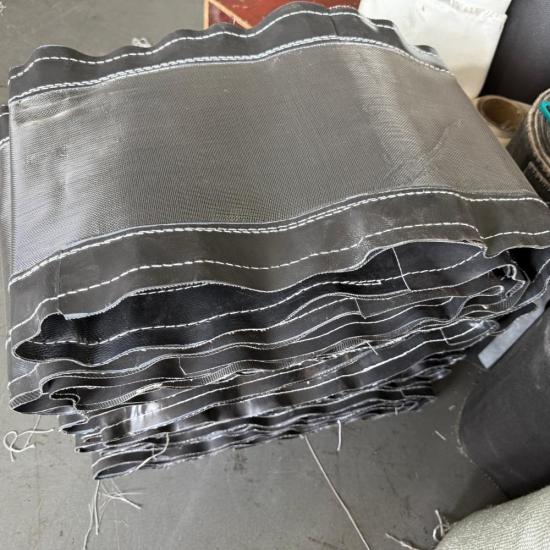
| Metal Mesh or Internal Liner | Mechanical or flow protection where required | Gas velocity, abrasion, particles and installation geometry |
For particularly demanding thermal environments, BSTFLEX can evaluate high-silica textile solutions such as96% high temperature silica fabricas part of the overall thermal protection system where technically appropriate.
The final material combination should always be determined from actual application data rather than temperature alone.
Ahigh temperature fabric expansion jointis not defined by one universal maximum temperature. The permissible operating temperature depends on the complete joint construction, including the hot-face protection, insulation package, reinforcement fabric, gas seal membrane, external cover and the temperature distribution through those layers.
For this reason, BSTFLEX evaluates both process temperature and the temperature expected at individual layers of the expansion joint. This approach allows the materials to be selected for their actual operating environment rather than relying on a single generic temperature rating.
When requesting a high-temperature joint, provide the normal operating temperature, maximum or upset temperature, exposure duration and process medium wherever possible.
BSTFLEX manufactures expansion joints according to the shape and dimensions of the customer's ducting system.
Arectangular fabric expansion jointis commonly used on large industrial ductwork, boiler systems, air-handling equipment, furnace connections and flue-gas ducts. Corner geometry, movement distribution and attachment design require particular attention because stress is not distributed in the same way as on a circular joint.
Round and circular fabric expansion joints are suitable for cylindrical duct systems, fan connections, exhaust lines and process-air installations. Diameter, face-to-face length and movement requirements can be manufactured according to the installation.
Non-standard shapes, transitions and asymmetric configurations can be evaluated when standard round or rectangular joints cannot match existing equipment.
Different attachment arrangements can be supplied depending on the duct design and replacement requirements.
Belt-type fabric expansion jointsuse a flexible belt attached to mating metalwork and are suitable for many large industrial duct applications.
Flanged fabric expansion jointscan be manufactured as complete assemblies where the flexible element, insulation components and supporting metalwork are supplied as an integrated unit.
For replacement projects, BSTFLEX can manufacture according to customer drawings, dimensional records or available sample information.
BSTFLEXnon metallic fabric expansion jointscan be engineered for a broad range of hot-air and process-gas ducting systems.
Fabric joints can be used in boiler ducting, flue-gas handling systems, fan connections and other large gas-transport ducts where thermal movement and vibration need to be isolated.
Cement production involves large ductwork exposed to heat, dust and continuous equipment movement. Expansion joints may be used around kiln-related ducting, process-air systems, fans and gas-handling equipment.
Furnace exhaust, hot-air ducts and process ventilation systems may require flexible connections capable of accommodating thermal growth while operating around demanding high-temperature equipment.
Where process gases contain corrosive constituents, joint materials should be selected according to chemical compatibility as well as temperature.
Fabric joints can compensate for expansion between heated equipment and downstream ductwork while helping isolate movement and vibration.
Flexible expansion joints can reduce the transmission of mechanical vibration between fans, blowers and rigid ducting.
High-temperature exhaust and hot-gas systems often require a flexible transition capable of accommodating repeated thermal cycles and installation movement.
| Design Factor | Fabric Expansion Joint | Metal Expansion Joint |
|---|---|---|
| Flexible Element | Technical fabric or composite textile construction | Formed metallic bellows |
| Typical System | Industrial ducting and gaseous-media systems | Pipe and process systems including higher-pressure service |
| Large Cross Sections | Well suited to large duct dimensions | Possible but design becomes more complex |
| Multidirectional Movement | Can accommodate axial, lateral and angular movement | Depends strongly on bellows configuration |
| Vibration Isolation | Good flexibility for fan and duct connections | Application dependent |
| Material Selection | Composite layers can be selected for thermal and chemical conditions | Determined mainly by metal alloy and bellows design |
The correct choice depends on pressure, temperature, process medium, duct geometry, required movement and applicable engineering standards. Fabric and metallic expansion joints should therefore not be treated as universally interchangeable products.
Selecting an expansion joint only by duct size or maximum temperature is not sufficient. Several operating parameters interact with each other and influence the appropriate construction.
The following information should be evaluated:
Providing this information allows the flexible element and supporting components to be selected around the real service conditions.
For faster engineering evaluation and quotation, send as much of the following information as available:
| Duct Size | Diameter or width × height |
| Joint Shape | Round, rectangular, square or custom |
| Installation Length | Face-to-face dimension |
| Operating Temperature | Normal continuous temperature |
| Maximum Temperature | Maximum or upset temperature and duration |
| Pressure | Normal and design pressure |
| Process Medium | Air, flue gas, exhaust gas or other process gas |
| Axial Movement | Compression and extension |
| Lateral Movement | Required offset movement |
| Angular Movement | Required angular displacement if applicable |
| Environment | Indoor, outdoor, chemical, dusty, wet or abrasive |
| Drawing | PDF, CAD drawing, dimensional sketch or existing joint details |
| Quantity | Prototype, replacement quantity or production requirement |
Industrial expansion joints are frequently project-specific components rather than standard catalogue parts. BSTFLEX supports customized manufacturing according to drawings, dimensional requirements and operating conditions.
Custom options may include:
Because BSTFLEX also works directly with thermal protection textiles and coated high-temperature fabrics, material construction can be evaluated as part of the expansion joint design instead of treating the flexible element as a generic component.
BSTFLEX focuses on engineered thermal protection and technical textile products for industrial applications. Our manufacturing capabilities cover high-temperature woven fabrics, coated fabrics, insulation materials and fabricated thermal components, providing a practical material base for customfabric expansion jointprojects.
A non metallic expansion joint is a flexible connection used primarily in ducting and gaseous-media systems to accommodate thermal expansion, vibration, misalignment and multidirectional movement. Its flexible element is normally manufactured from technical fabrics, coated textiles, insulation and other non-metallic materials selected according to the operating environment.
A fabric expansion joint uses a flexible textile or composite membrane, while a metallic expansion joint normally uses formed metal bellows. Fabric joints are widely used on large industrial ducts and gas-handling systems, while metallic bellows are common in piping and applications where system pressure or process requirements favor metallic construction.
Yes. Properly designed fabric expansion joints can accommodate axial, lateral and angular movement as well as combinations of these movements. The required movements must be provided during design so the joint geometry can be selected correctly.
There is no single temperature rating for every fabric expansion joint. Temperature capability depends on the flexible membrane, insulation package, hot-face protection, sealing material and overall joint construction. BSTFLEX selects the material system according to the normal operating temperature, maximum temperature and exposure conditions.
Depending on the application, materials may include fiberglass fabric, silicone-coated fiberglass, PTFE-coated fabric, silica fabric, insulation materials and metallic protective components. Each layer is selected according to its specific function.
Yes. Fabric expansion joints are widely applicable to industrial flue-gas and hot-gas ducting when the construction is engineered for the process temperature, chemical composition, moisture, pressure, gas velocity and movement requirements.
Yes. BSTFLEX manufactures rectangular, round, square and other custom configurations according to duct dimensions and installation requirements.
In many cases, yes. Dimensional measurements, photographs, operating conditions and information from the existing expansion joint can be used for an initial evaluation. A complete drawing or physical sample provides additional information when available.
The most useful information includes duct dimensions, joint shape, face-to-face length, operating and maximum temperature, pressure, process medium, axial movement, lateral movement, angular movement, gas velocity, chemical exposure, flange arrangement and required quantity. Drawings are strongly recommended where available.
Eğer bir genleşme derzi değişimi veya yeni bir endüstriyel kanal sistemi geliştirme aşamasındaysanız, çiziminizi ve çalışma koşullarınızı BSTFLEX'e gönderin. Ekibimiz, uygulamanız için gerekli şekli, boyutları, esnek malzemeleri, yalıtım yapısını ve hareket gereksinimlerini değerlendirebilir.
Fiyat teklifi almak için lütfen aşağıdaki bilgileri sağlayın:Kanal boyutları, sıcaklık, basınç, proses ortamı, hareket gereksinimleri, montaj uzunluğu, miktar ve mevcut çizimler.
Kumaş Genleşme Derz Projeniz İçin Fiyat Teklifi İsteyin
öncesi:
tig parmak ısı kalkanısonraki:
Enjeksiyon Makinesi Namlu Yalıtım ÖrtüsüSorularınız veya önerileriniz varsa, lütfen bize bir mesaj bırakın, size mümkün olan en kısa sürede cevap vereceğiz!

 English
 français
 Deutsch
 русский
 italiano
 español
 português
 Nederlands
 العربية
 日本語
日本語 한국의
한국의 Polski
 Tiếng Việt
 slovenský
 Indonesia