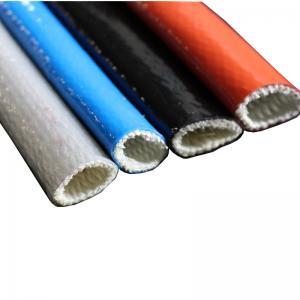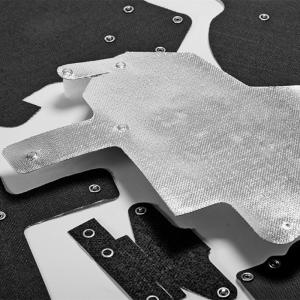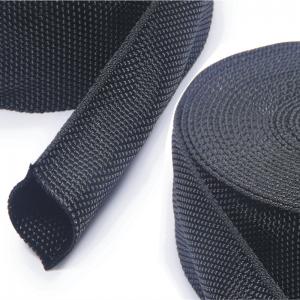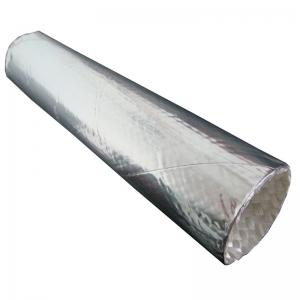
Akumaş genleşme derziEsnek bağlantı elemanı, endüstriyel havalandırma kanallarında ekipman veya havalandırma kanallarının bölümleri arasındaki hareketi absorbe etmek için kullanılır. Isıl genleşmeyi, titreşimi veya hizalama değişikliklerini sert çelik yapılara zorlamak yerine, sistem hareket ettikçe esnek bölüm deforme olur.
Kumaş genleşme derzleri, sıcak hava, egzoz gazı, baca gazı ve diğer gaz halindeki proses ortamlarını taşıyan sistemlerde yaygın olarak kullanılır. Esnek elemanları, gerçek çalışma koşullarına göre seçilen dokuma teknik kumaşlardan, kaplamalı kumaşlardan, gaz sızdırmazlık membranlarından, takviye katmanlarından ve ısı yalıtımından oluşabilir.
Esnek eleman metal olmadığı için, bu tür bağlantıya yaygın olarak "eklemli bağlantı" da denir.metal olmayan genleşme derziveyametal olmayan kumaş genleşme derzi.
Özel endüstriyel tasarımlar için lütfen aşağıdaki bilgilere bakın.BSTFLEX Metal İçermeyen Kumaş Genleşme Derzi.
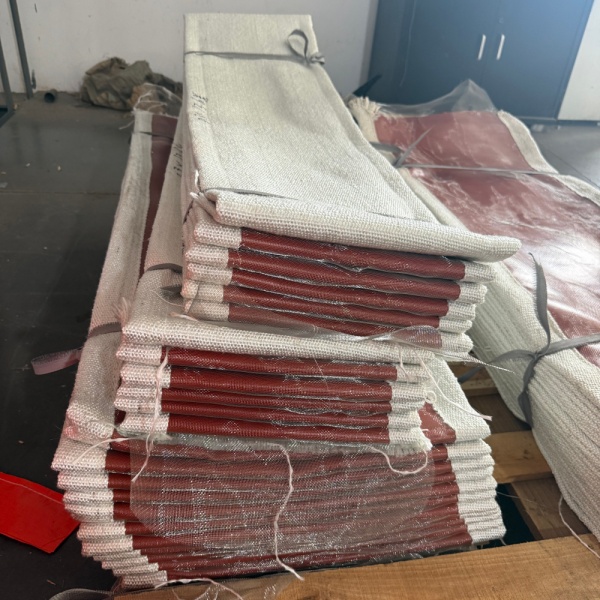
Kumaş genleşme derzi, bir kanal sisteminin nispeten rijit iki parçası arasına yerleştirilen, mühendislik ürünü esnek bir bölümdür. Amacı, bu bölümler arasında gerekli bağlantıyı korurken kontrollü harekete izin vermektir.
Endüstriyel havalandırma kanalları, çalışma sırasında nadiren boyut olarak değişmeden kalır. Bir fırın, kazan, egzoz sistemi veya proses kanalı ısındığında, çevredeki metal yapı genleşir. Soğuduğunda ise tekrar büzülür. Fanlar ve dönen ekipmanlar da titreşim oluşturabilirken, montaj toleransları bitişik bileşenler arasında küçük sapmalara neden olabilir.
Bu hareketler doğrudan rijit havalandırma kanalları aracılığıyla iletilirse, aşağıdaki noktalarda ek yükler oluşturabilirler:
Kumaş bağlantı noktası, hareketin bir kısmının, kanal yapısının tamamının rijit bir düzenek gibi davranmasını gerektirmeden gerçekleşebileceği esnek bir bölge oluşturur.
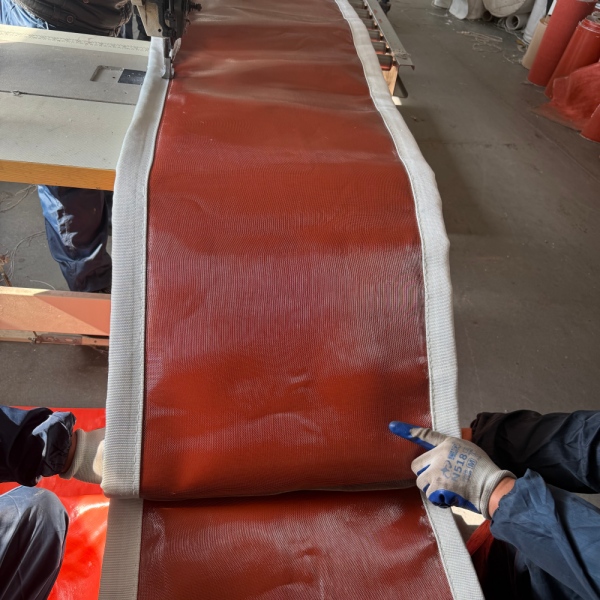
Dönemmetal olmayan genleşme derziBu ifade, komple montajdaki her bir bileşeni değil, esnek elemanı tanımlar.
Eklem çevresinde metal çerçeveler, sıkıştırma çubukları, astarlar veya diğer donanımlar kullanılmaya devam edilebilir. Bununla birlikte, birincil esnek hareketi gerçekleştiren bölüm, şekillendirilmiş metal körük yerine kumaş, elastomer, kaplamalı tekstil, lamine membran veya bu malzemelerin bir kombinasyonundan üretilir.
Bu ayrım önemlidir çünkü kumaş ve metal genleşme derzleri farklı şekilde davranır.
Metal bir körük, şekillendirilmiş metal kıvrımların esnemesiyle hareketi karşılar. Kumaş genleşme derzi ise, kanalın hareketine bağlı olarak şekil değiştirmek için tekstil veya kompozit kayışının esnekliğinden yararlanır.
Özellikle nispeten düşük basınçta gaz taşıyan büyük endüstriyel kanallar için bu yapı, kompakt bir kurulum alanında önemli bir hareket kabiliyeti sağlayabilir.
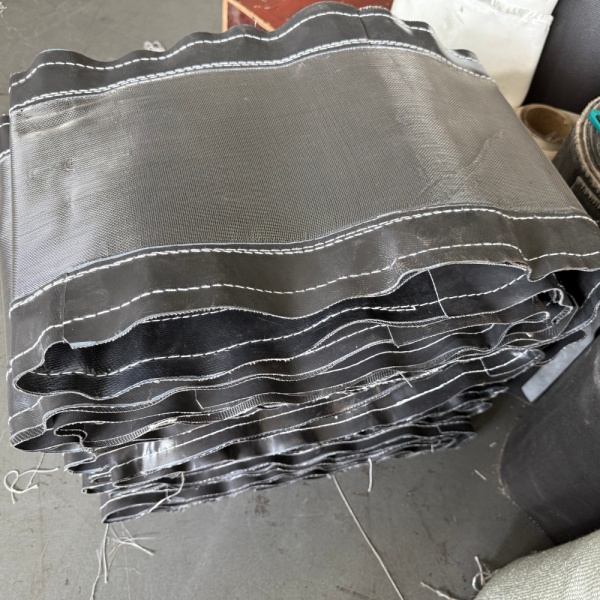
Temel çalışma prensibi oldukça basittir.
Kontrollü bir boşlukla ayrılmış iki sıcak hava kanalı bölümünü hayal edin. Esnek bir kumaş eleman bu boşluğu köprüler ve her kanal bölümünün çevresine güvenli bir şekilde tutturulur.
Havalandırma kanalları ısındığında ve genleştiğinde, iki bölüm arasındaki mesafe veya hizalama değişir. Sert bir bağlantının yapacağı gibi bu harekete direnmek yerine, esnek bant şekil değiştirir.
Tasarıma bağlı olarak, bağlantı çeşitli hareket türlerine yanıt verebilir.
Eksenel sıkıştırma, iki kanal bölümü arasındaki mesafenin merkez hattı boyunca kısalması durumunda meydana gelir.
Bu durum sıklıkla termal genleşme nedeniyle havalandırma kanallarının bir bölümünün diğerine doğru hareket etmesiyle ortaya çıkar. Esnek kısım, mesafedeki azalmayı karşılamak için kontrollü bir şekilde sıkışır veya katlanır.
Eksenel uzama ise bunun tam tersi durumdur. Bağlantı bölümleri arasındaki mesafe, uzunlamasına eksen boyunca artar.
Kumaş elemanının aşırı gerilmeden uzayabilmesi için yeterli geometrik şekle sahip olması gerekir.
Yanal hareket, bir kanal bağlantısının diğerine göre yana doğru kayması durumunda meydana gelir.
Bu durum, özellikle ekipman hareketinin, farklı yönde termal genleşmenin veya montaj geometrisinin basit bir sıkıştırma veya genişleme yerine bir sapma yarattığı büyük kanal sistemlerinde önemlidir.
İki bağlantı yüzeyi artık paralel olmadığında açısal hareket meydana gelir.
Esnek kayış, çevresi boyunca düzensiz bir şekilde deforme olur; bu da bir tarafın sıkışmasına, diğer bir bölümün ise genişlemesine olanak tanır.
Gerçek endüstriyel sistemler her zaman tek yönde hareket etmez. Eksenel, yanal ve açısal yer değiştirme aynı anda gerçekleşebilir.
Bu, bir nedenin sebebidir.kumaş kanal genleşme derziÖzellikle karmaşık kanal düzenlerinde kullanışlıdır. Bağlantı geometrisi, her bir yer değiştirmeyi bağımsız olarak ele almak yerine, beklenen hareket kombinasyonuna göre tasarlanabilir.
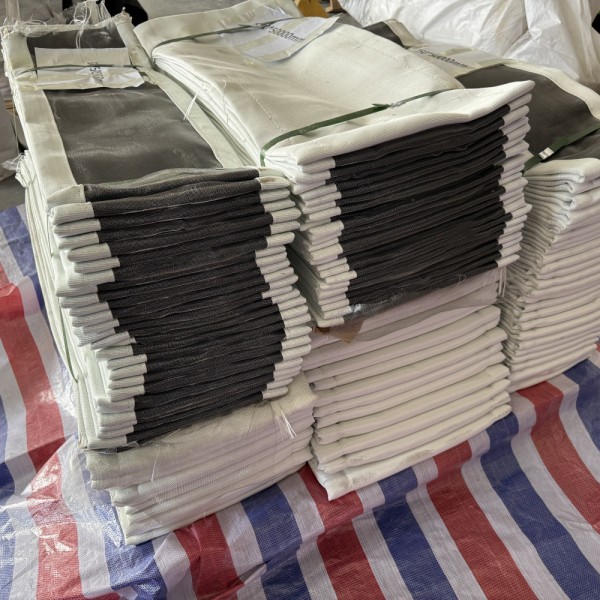
Genleşme derzi takılmasının en bilinen nedeni termal genleşmedir, ancak tek neden bu değildir.
Hareketin tam olarak gerçekleşmesi gerekliliği, çeşitli işletme koşullarından kaynaklanabilir.
| Neden | Sistemde Neler Oluyor? | Genleşme Derzinin Rolü |
|---|---|---|
| Termal Genleşme | Metal havalandırma boruları sıcaklık artışıyla genleşir. | Kontrollü boyutsal harekete olanak tanır. |
| Isıl Büzülme | Sistemin kapatılması veya soğutulması sırasında havalandırma kanalları büzülür. | Allows the system to return toward its cold position |
| Fan Vibration | Mechanical vibration is transferred from rotating equipment | Provides a flexible connection between equipment and ducting |
| Misalignment | Connecting duct faces may not be perfectly aligned | Can accommodate specified offsets within the joint design |
| Structural Movement | Supports or equipment may move relative to each other | Provides a controlled flexible section |
| Operating Cycles | Repeated heating and cooling creates cyclic movement | Accommodates repeated dimensional changes when correctly designed |
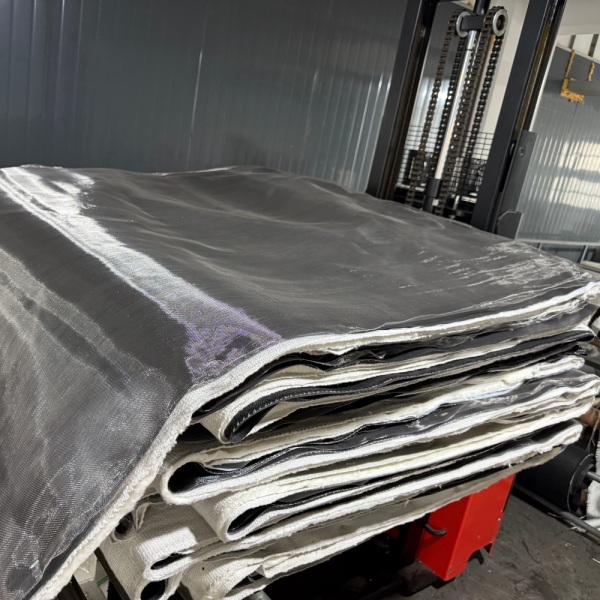
A fabric expansion joint should not be viewed simply as a piece of cloth connecting two ducts.
The flexible section is an engineered material system. Depending on service conditions, it may use a single flexible layer or several different layers, each selected for a specific function.
The outer layer forms part of the flexible envelope and may also provide resistance to weathering, environmental exposure or external mechanical conditions.
This layer helps contain the process gas. Its material must be compatible with the expected temperature, gas composition, moisture and chemical exposure.
Reinforcement provides mechanical support and dimensional stability to the flexible element. Fiberglass and other technical textile constructions are commonly considered depending on temperature and mechanical requirements.
High gas temperature does not necessarily mean every layer of an expansion joint should be exposed directly to that temperature.
An insulation package can reduce heat transfer from the process side toward temperature-sensitive sealing or outer layers.
Hot gas velocity, ash, dust or abrasive particles can damage an unprotected flexible surface. Some systems therefore require an internal liner, baffle or other protection to shield the joint from direct gas flow and particulate impact.
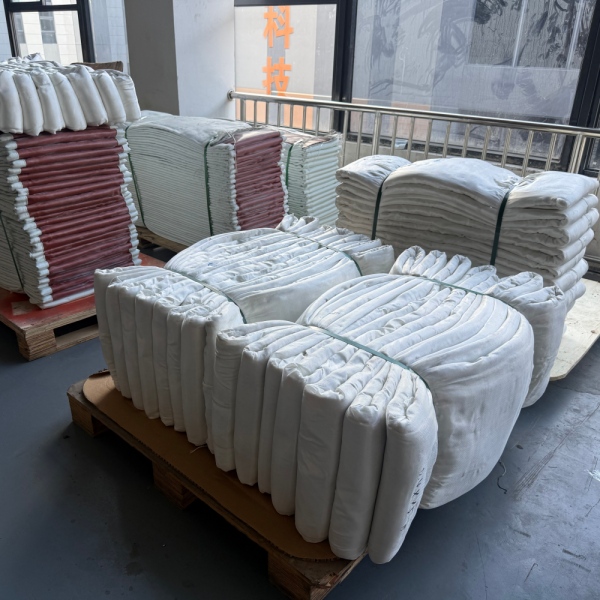
One material rarely provides every property required by a severe industrial application.
For example, a material with excellent temperature resistance may not provide the best gas sealing. A highly flexible sealing material may require reinforcement. A chemically resistant membrane may need insulation to keep its operating temperature within an acceptable range.
As a result, manyfabric expansion jointsuse a combination of materials rather than one fabric performing every function.
Typical material families include:
BSTFLEX also manufactures a broad range ofhigh temperature fabrics, allowing material construction to be evaluated according to thermal, chemical and mechanical requirements.
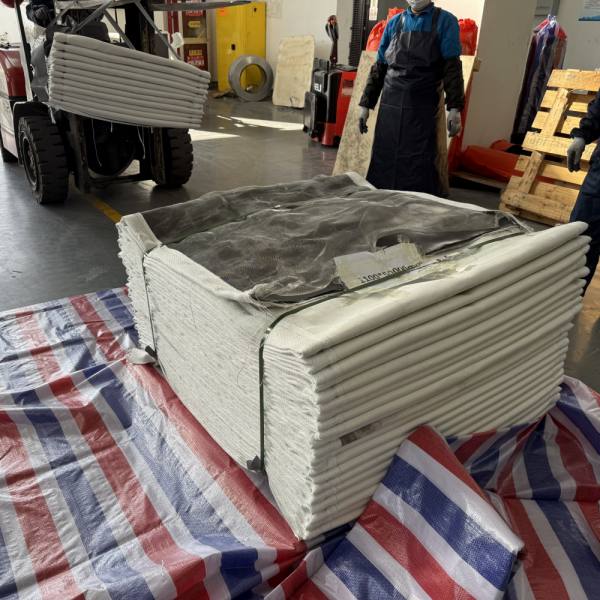
Fabric joints are mainly associated with industrial gas-handling and ducting systems rather than conventional high-pressure liquid piping.
Typical applications include the following.
Boilers, furnaces and combustion equipment can generate hot flue gases that must travel through large duct networks. These ducts experience significant dimensional change between ambient and operating temperatures.
Exhaust ducts connected to engines, industrial furnaces, thermal processing equipment or pollution-control systems may require movement compensation between hot equipment and downstream ducting.
Power plants use large gas-handling systems around boilers, fans, air-handling equipment and emission-control installations. Thermal growth and vibration can occur at multiple connection points.
Cement production combines heat, large duct dimensions, dust and continuous process operation. Flexible expansion sections may be required around kiln-related systems, fans and process ducts.
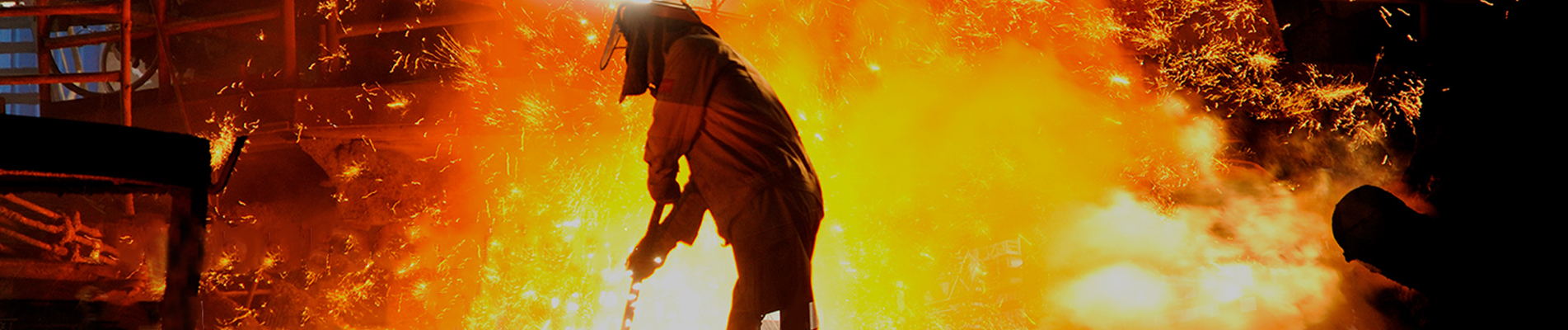
High-temperature furnaces, hot-air systems and exhaust ducts in steel and metal-processing plants can generate significant thermal movement.
Placing a flexible connection between rotating equipment and rigid ducting can help prevent all equipment movement from being transmitted directly into the surrounding duct structure.
Large ducting systems used with filtration, scrubber, flue-gas treatment and other air-pollution-control equipment often need flexible connections between process components.
Both products are intended to manage movement, but they should not be considered interchangeable simply because they share the term “expansion joint.”
| Characteristic | Fabric Expansion Joint | Metallic Bellows |
|---|---|---|
| Flexible Element | Fabric, coated textile or composite membrane | Formed metal bellows |
| Common Application | Large industrial ducts and gaseous-media systems | Industrial piping and engineered duct or process systems |
| Movement Method | Flexible belt changes geometry | Metal convolutions flex |
| Large Duct Sizes | Well suited to custom large cross-sections | Requires application-specific metallic design |
| Multidirectional Movement | Can accommodate several movement directions in one flexible section | Depends on bellows geometry and assembly design |
| Material System | Can combine several fabric, coating and insulation layers | Primarily determined by metallic alloy and bellows construction |
Pressure, temperature, process medium, movement, duct size and system design must all be considered before deciding which expansion joint technology is appropriate.
A flexible joint can help isolate vibration between connected components because its flexible element does not behave like a completely rigid metal duct section.
This is useful near fans, blowers and other equipment that produces mechanical vibration.
However, vibration should still be treated as an engineering input. Frequency, amplitude, equipment arrangement and joint geometry all influence performance. A fabric expansion joint should not be selected only because a system is described as “vibrating.”
There is no universal movement value that applies to every fabric expansion joint.
Movement capability depends on:
For this reason, axial, lateral and angular movements should be stated separately when specifying a custom expansion joint.
A request such as “50 mm total movement” is less useful than specifying how that movement occurs.
For example:
These values are examples of how movement information can be communicated, not standard ratings for every joint.
There is also no single temperature rating that defines all fabric expansion joints.
The allowable process temperature depends on the complete construction.
A high-temperature joint may be designed so that the process-side protection and insulation reduce the temperature reaching the gas-sealing membrane and external flexible layers.
Temperature selection should therefore consider:
This is why specifying only “high temperature fabric expansion joint” is insufficient for engineering selection.
A manufacturer needs more than the nominal duct dimensions to select a reliable construction.
The most useful project information includes:
| Design Information | Typical Details Required |
|---|---|
| Duct Geometry | Round, rectangular, square or special shape |
| Dimensions | Diameter or width and height |
| Face-to-Face Length | Available installation distance |
| Temperature | Normal and maximum process temperature |
| Pressure | Positive or negative operating and design pressure |
| Process Medium | Hot air, flue gas, exhaust gas or other process gas |
| Axial Movement | Compression and extension |
| Lateral Movement | Required transverse offset |
| Angular Movement | Required angular displacement |
| Chemical Conditions | Acidic, alkaline, moisture or other process exposure |
| Particulate Loading | Dust, ash or abrasive particles |
| Installation Environment | Indoor, outdoor, weather exposure or confined area |
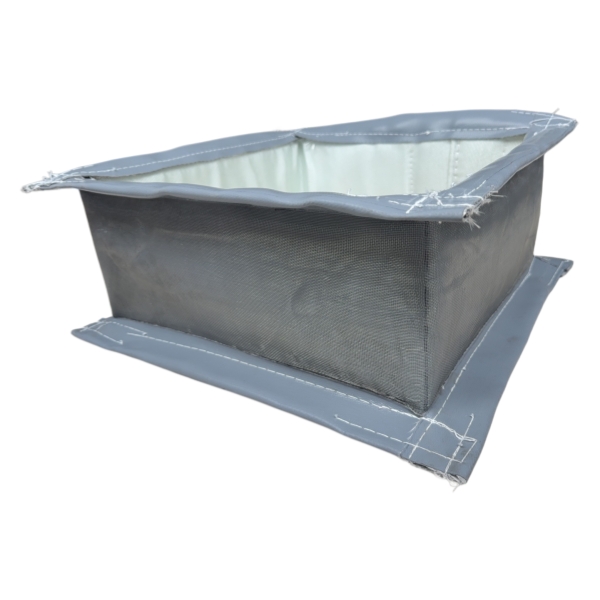
Anon metallic expansion jointshould be considered when an industrial ducting system needs flexibility and the operating conditions are suitable for a fabric-based construction.
Typical reasons include:
The final decision should always be based on actual system conditions rather than the product name alone.
Some basic constructions can be standardized, but industrialfabric expansion jointsare frequently customized.
Two ducts with the same dimensions may require completely different expansion joints if they operate at different temperatures, carry different gases or experience different movements.
Important differences may include:
This is why drawings and operating data are particularly valuable when sourcing replacement or OEM fabric expansion joints.
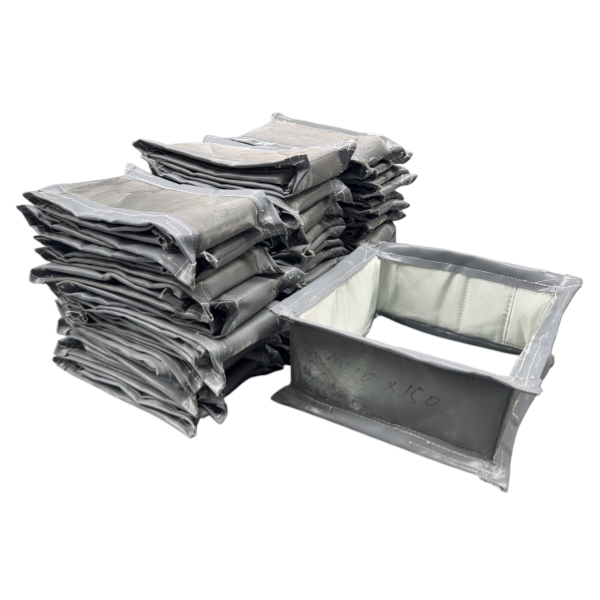
Rectangular joints are widely used on large industrial duct systems. Their corner sections require careful design because the flexible element does not deform identically along straight sides and corners.
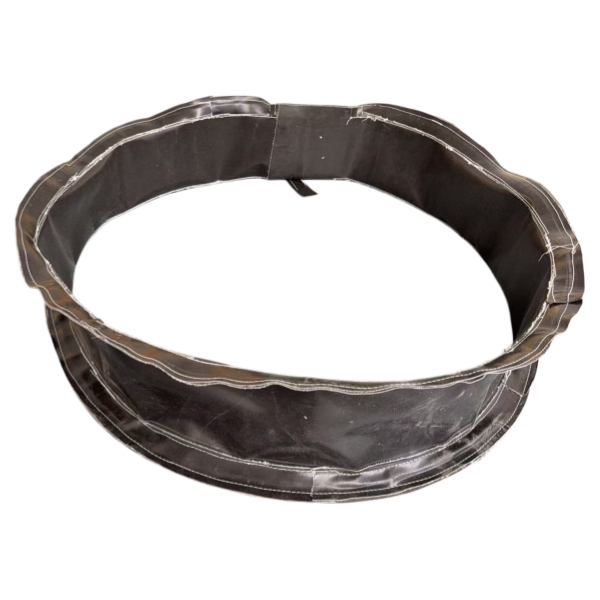
Round joints are used on circular ducting, fan connections and exhaust systems. The circumference provides a continuous attachment surface around the duct.
Square configurations are similar in principle to rectangular designs but may be required by specific duct or equipment layouts.
Transitions, non-standard dimensions and application-specific geometries can be manufactured when existing industrial equipment cannot accept a standard shape.
Expansion joint service life depends heavily on correct specification and installation.
Potential failure mechanisms include:
A damaged joint should therefore not automatically be replaced with an identical copy without understanding why the original unit failed.
For replacement projects, operating history can be as valuable as dimensional information.
In industrial ducting, the terms are often used for closely related products. A fabric expansion joint uses a flexible non-metallic fabric or composite element, so it falls within the broader non-metallic expansion joint category. The exact terminology varies by industry and construction.
It provides a flexible connection between sections of industrial ductwork so thermal expansion, contraction, lateral displacement, angular movement, vibration and specified misalignment can be accommodated without making the connection completely rigid.
Typical locations include industrial exhaust ducts, flue-gas systems, furnace and boiler ductwork, fan connections, cement plants, power-generation equipment, steel-processing facilities and air-pollution-control systems.
Yes. Depending on the design, they can accommodate axial compression, axial extension, lateral movement, angular movement and combinations of these movements.
No. Fiberglass is an important reinforcement and high-temperature textile, but complete expansion joints may combine coated fiberglass, PTFE-coated fabric, silicone-coated textiles, silica fabrics, insulation and other materials according to operating conditions.
Evet, tüm malzeme sistemi gerçek proses sıcaklığı ve gaz koşullarına göre tasarlandığında. Yüksek sıcaklık uygulamaları genellikle birden fazla fonksiyonel katman ve sıcak gaz akışı ile esnek sızdırmazlık elemanı arasında uygun koruma gerektirir.
Otomatik olarak değil. Kumaş ve metal genleşme derzlerinin basınç, hareket, sıcaklık ve mekanik özellikleri farklıdır. Genleşme derzi teknolojisi değiştirilmeden önce sistem koşulları değerlendirilmelidir.
Faydalı bilgiler arasında kanal genişliği ve yüksekliği veya çapı, uçtan uca uzunluk, flanş boyutları, cıvata düzeni, bağlantı şekli ve mevcut montaj alanı yer alır. Çalışma sıcaklığı, basınç, ortam ve hareket gereksinimleri de önemlidir.
BSTFLEX geliştiriyorkumaş genleşme derzleriEndüstriyel havalandırma kanalları, egzoz, sıcak hava ve baca gazı uygulamaları için. Yapı, yuvarlak, dikdörtgen, kare ve standart dışı kanal geometrilerine uyarlanabilir; malzeme sistemleri sıcaklık, basınç, proses ortamı, hareket ve kurulum koşullarına göre seçilir.
Yeni bir sistem geliştiriyorsanız veya mevcut bir bağlantıyı değiştiriyorsanız, aşağıdaki hususları inceleyin.BSTFLEX Metal İçermeyen Kumaş Genleşme DerziMevcut yapı ve özelleştirme seçenekleri için ürün sayfasına bakın.
Mühendislik değerlendirmesi için lütfen kanal ölçülerinizi, normal ve maksimum sıcaklığı, çalışma basıncını, proses ortamını, eksenel hareketi, yanal hareketi, montaj uzunluğunu, miktarı ve mevcut çizimleri gönderin.

 English
 français
 Deutsch
 русский
 italiano
 español
 português
 Nederlands
 العربية
 日本語
日本語 한국의
한국의 Polski
 Tiếng Việt
 slovenský
 Indonesia