Birinden diğerine seçim yapmakkumaş genleşme derzive birmetal genleşme derziBu, sadece hangi ürünün daha güçlü olduğu veya hangi malzemenin en yüksek sıcaklığa dayanabileceği sorusu değildir. Doğru seçim, sistemin nasıl hareket ettiğine, hangi basınç altında çalıştığına, içinden hangi ortamın geçtiğine, kanal veya borunun boyutuna ve bağlı ekipmana ne kadar yük aktarılabileceğine bağlıdır.
Genel olarak, kumaş genleşme derzleri, sıcak hava, egzoz gazı veya baca gazı taşıyan büyük, düşük basınçlı kanal sistemlerinde oldukça etkilidir; metal körükler ise basınç yalıtımı ve mekanik dayanıklılığın kritik olduğu basınçlı boru ve proses sistemlerinde yaygın olarak tercih edilir.
Aşağıdaki karşılaştırma, her bir tasarımın en iyi performansı gösterdiği alanları ve genleşme derzi belirtmeden önce hangi faktörlerin değerlendirilmesi gerektiğini açıklamaktadır.
Hızlı Karar:
Birini seçinkumaş genleşme derziUygulama geniş kanal sistemleri, düşük basınç, önemli yanal veya kombine hareket, titreşim, sıcak gazlar veya sınırlı izin verilen tepki yükleri içerdiğinde.
Birini seçinmetal genleşme derziUygulama basınçlı boru hatları, buhar, sıvılar, yüksek mekanik yükler veya özellikle metal körükler etrafında tasarlanmış bir sistemi içerdiğinde.
| Seçim Faktörü | Kumaş Genleşme Derzi | Metal Genleşme Derzi |
|---|---|---|
| Tipik Hizmet | Endüstriyel havalandırma kanalları ve gaz ortamları | Boru hatları, tanklar ve mühendislik ürünü proses sistemleri |
| Basınç Kapasitesi | Öncelikle düşük basınçlı uygulamalar | Çok daha yüksek basınca dayanacak şekilde tasarlanabilir. |
| Büyük Kanal Boyutları | Çok uygun | Mümkün, ancak genellikle mekanik olarak daha karmaşık. |
| Eksenel Hareket | Doğru tasarlandığında mükemmel | Uygun körük geometrisiyle mükemmel sonuç verir. |
| Yanal Hareket | Kompakt düzenlemelerde yüksek hareket kabiliyeti | Genellikle uygun körük konfigürasyonu gerektirir. |
| Açısal Hareket | Birleşik hareketlere olanak sağlayabilir. | Mühendislik ürünü konfigürasyonlarla mevcuttur. |
| Titreşim İzolasyonu | Çok iyi esneklik | Uygulamaya bağlı |
| Spring Force | Genellikle düşük | Körükler ölçülebilir yay kuvvetleri üretir. |
| Malzeme Sistemi | Kompozit kumaşlar, membranlar ve yalıtım malzemeleri | Metal alaşımlı körükler |
| Ortak Medya | Sıcak hava, egzoz gazı, baca gazı, proses gazı | Buhar, sıvılar, gazlar ve proses sıvıları |
| Tipik Geometri | Yuvarlak, dikdörtgen ve büyük özel şekiller | Genellikle yuvarlak, ancak isteğe bağlı dikdörtgen tasarımlar da mevcuttur. |
Seçim sürecine başlamanın en kolay yollarından biri, genleşme derzinin büyük bir endüstriyel kanala mı yoksa basınçlı bir boru sistemine mi takılacağını belirlemektir.
Ametal olmayan kumaş genleşme derziÖzellikle büyük hava ve gaz kanalları için oldukça uygundur. Bu sistemler sıklıkla enerji santrallerinde, çimento fabrikalarında, çelik fabrikalarında, endüstriyel fırınlarda, toz toplama sistemlerinde, yanma ekipmanlarında ve egzoz tesisatlarında bulunur.
Proses ortamı genellikle gaz halindedir ve basınç, basınçlı proses borularına kıyasla genellikle nispeten düşüktür.
Metalik genleşme derzleri, basınç muhafazasını korurken esneklik sağlamak için ince şekillendirilmiş metal kıvrımlar kullanır. Metalik körükler, basıncın önemli bir tasarım gereksinimi olduğu buhar, proses boru hatları, petrokimya, kimya ve diğer mühendislik sistemlerinde yaygın olarak kullanılır.
Uygulama ortamındaki bu farklılık, iki teknoloji arasındaki performans farklılıklarının çoğunu açıklamaktadır.
Basınç, genellikle kumaş genleşme derzini metal körükten ayıran ilk faktördür.
Kumaş bağlantı elemanları öncelikle düşük basınçlı havalandırma kanalları için tasarlanmıştır. Esnek elemanları, basınç içeren metalik bir körük yerine, kaplanmış kumaşlardan, takviye katmanlarından, sızdırmazlık membranlarından ve yalıtım malzemelerinden oluşur.
Bunlar genellikle şu yerlerde bulunur:
Metal bir körük, oldukça yüksek iç basınca dayanacak şekilde tasarlanabilir. Kıvrımlı metal duvarı hem esneklik hem de basınç tutma özelliği sağlayacak şekilde tasarlanmıştır.
Bu özellik, metal genleşme derzlerini aşağıdaki gibi uygulamalar için uygun hale getirir:
Seçim kuralı:Sistem basıncının önemli ölçüde kontrol altında tutulması gerekiyorsa, öncelikle metal körükler değerlendirilmelidir. Kumaş genleşme derzleri, basınca dayanıklı metal körüklerin doğrudan yerine geçecek bir unsur olarak düşünülmemelidir.
Kumaş tasarımları, hareket halindeyken özellikle çekici hale gelir.
Kumaş bir kemer, nispeten geniş bir alanda deforme olabilir. Bu, çok sayıda şekillendirilmiş metal kıvrıma ihtiyaç duymadan önemli eksenel, yanal ve açısal yer değiştirmeyi karşılamasına olanak tanır.
Isıl genleşmenin birden fazla yönde gerçekleştiği büyük kanal sistemlerinde, bu durum genleşme derzlerinin düzenlenmesini önemli ölçüde basitleştirebilir.
Metal körükler de bu hareketlere olanak sağlayabilir, ancak körük konfigürasyonunun bunlara özel olarak tasarlanması gerekir.
For example, larger lateral displacement may require a universal metallic expansion joint with multiple bellows and a center pipe rather than a single bellows element.
Therefore, when large lateral or combined movement is required in a low-pressure duct, afabric expansion jointis often the more practical design.
This is an important engineering difference that is often overlooked during purchasing.
A metallic bellows behaves like a mechanical spring. When it is compressed, extended or laterally displaced, it generates reaction forces that must be considered in the piping design.
These forces may influence:
Fabric expansion joints generally produce much lower spring forces because the flexible textile element is considerably softer than formed metal bellows.
For large duct systems connected to fans, furnaces or lightweight structural components, reducing these reaction loads can be a major advantage.
Fans, blowers, turbines and other rotating equipment can transmit vibration into connected ductwork.
A flexible fabric connector can help isolate some of this vibration because the textile belt does not create the same rigid mechanical path as solid ductwork.
This makes fabric expansion joints especially useful around:
Metal expansion joints can also accommodate vibration, but the movement amplitude, frequency and expected cycle life must be considered carefully in the bellows design.
For high-cycle vibration, neither product should be selected solely from a general product specification. Actual vibration data should be supplied to the manufacturer.
Large rectangular ductwork strongly favors fabric construction in many industrial systems.
Consider an exhaust duct measuring several meters across. Producing a metallic flexible element for such a large cross-section requires substantial metal fabrication and careful control of corner stresses.
A rectangular fabric joint can use a flexible belt installed around the perimeter of the duct, making very large dimensions more practical.
This is whyrectangular fabric expansion jointsare frequently seen in:
For these applications, size alone can significantly influence the final choice.
It is incorrect to assume that metal is always better at high temperature or that fabric automatically has a lower usable process temperature.
The two systems manage temperature differently.
Metallic bellows temperature capability is determined primarily by the selected alloy, design pressure, material strength at temperature and expected fatigue life.
Stainless steels and nickel-based alloys can be selected for elevated-temperature service.
A high-temperature fabric expansion joint may use several thermal layers rather than exposing one flexible membrane directly to the process gas.
A typical construction may include:
The insulation package can reduce the temperature reaching the external sealing materials.
Therefore, ahigh temperature fabric expansion jointshould be selected based on the full temperature gradient through the joint, not simply on the temperature rating of one fabric.
Hot flue gas and exhaust systems are among the most common applications for non-metallic designs.
These installations often combine:
That combination closely matches the strengths of fabric expansion joints.
Typical installations include:
For customized designs, BSTFLEX manufacturesNon Metallic Fabric Expansion Jointsfor industrial ducting, hot-air, flue-gas and exhaust applications.
Corrosion resistance cannot be judged simply by comparing “fabric” with “metal.”
The actual materials must be compared.
A metallic expansion joint may use corrosion-resistant stainless steel or nickel alloy when aggressive media are present.
A fabric expansion joint may use chemical-resistant barrier layers such as PTFE-coated textiles or other compatible membrane systems.
Selection should consider:
Condensation is particularly important in flue-gas systems because chemical attack may become more severe when corrosive gases condense on cooler joint surfaces.
Neither fabric nor metallic bellows should necessarily be exposed directly to severe turbulent flow or abrasive particles without protection.
A fabric joint may use:
A metallic bellows may also require an internal liner to prevent erosion, turbulent excitation or direct impingement on the convolutions.
This means gas velocity, dust loading and flow direction should always be included in the expansion joint specification.
Available space can strongly affect the decision.
A fabric joint can often absorb considerable lateral movement within a relatively short flexible span.
Metallic systems can also accommodate large displacement, but may require more complex arrangements such as universal joints, hinged joints or gimbal configurations depending on movement direction.
However, there are also piping layouts where a compact metallic bellows is the more appropriate design.
Installation space should therefore be considered together with pressure and movement rather than as an isolated factor.
Fabric flexible elements are generally lighter than comparable large metallic assemblies.
This difference becomes increasingly important as duct dimensions increase.
Lower component weight can reduce loads during:
In very large rectangular duct systems, this can be an important practical advantage.
Fabric expansion joints are often designed with replaceable flexible belts.
If the surrounding steel frames remain serviceable, maintenance may involve replacing the flexible element rather than removing the complete assembly.
This can be useful in large duct installations where removing welded steel frames would create significant shutdown work.
Metal expansion joints generally require replacement or repair of the metallic bellows assembly when the bellows itself becomes damaged.
The actual maintenance cost depends on system design, accessibility, joint size and failure mode.
There is no meaningful universal statement such as “metal lasts longer than fabric.”
Service life depends on whether the joint was correctly designed for the application.
A fabric joint can fail prematurely because of:
A metal bellows can fail because of:
Correct engineering matters more than simply choosing one material category over another.
| Application | Usually Preferred | Reason |
|---|---|---|
| Large Low-Pressure Flue Gas Duct | Fabric Expansion Joint | Large size, flexibility and multidirectional movement |
| High-Pressure Steam Pipe | Metal Expansion Joint | Pressure containment requirement |
| Large Rectangular Exhaust Duct | Fabric Expansion Joint | Practical for large custom cross-sections |
| Fan Connection | Fabric Expansion Joint | Low reaction forces and vibration isolation |
| Pressurized Chemical Pipeline | Metal Expansion Joint | Pressure and mechanical requirements |
| Cement Kiln Exhaust Duct | Fabric Expansion Joint | Hot gas, large duct and substantial movement |
| Process Piping | Metal Expansion Joint | Engineered for piping pressure and code requirements |
| Large Boiler Flue Duct | Fabric Expansion Joint | Low-pressure hot-gas application |
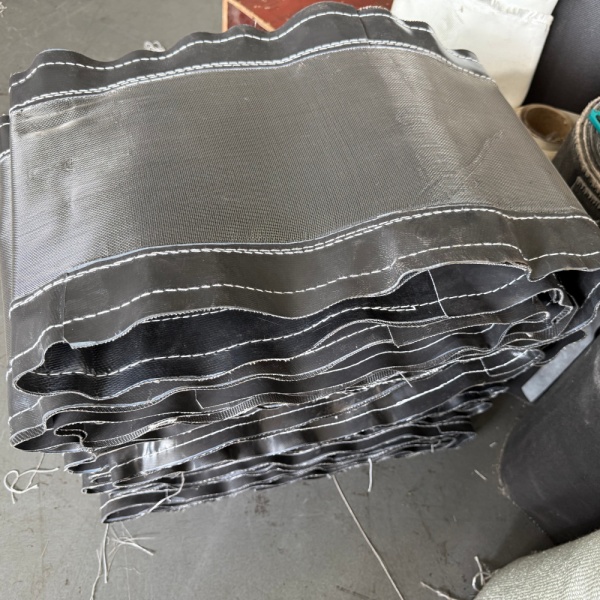
Afabric expansion jointshould be seriously considered when most of the following conditions are present:
This is the typical application envelope for anon metallic expansion joint.
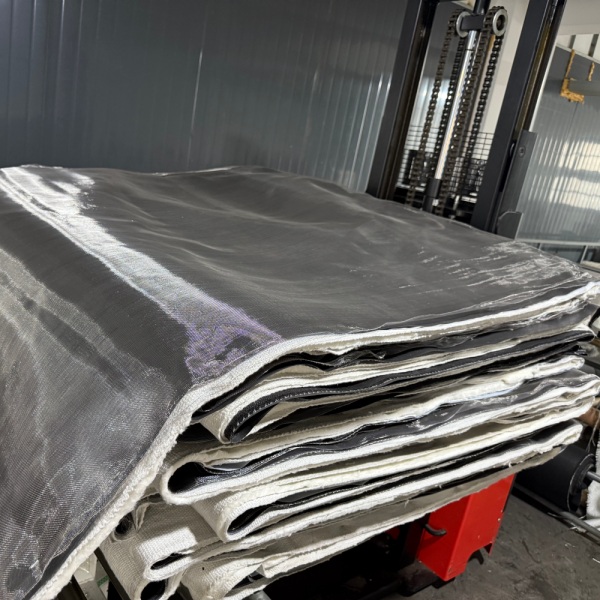
A metallic expansion joint should normally be evaluated first when:
Metallic bellows are engineered pressure-containing components and should be designed around system pressure, temperature, movement, material, fatigue life and piping loads.
Instead of asking, “Which expansion joint is better?” engineers should ask, “Which expansion joint architecture matches this system?”
Use the following sequence.
Is it a large duct or pressurized pipe?
Specify normal pressure, design pressure and whether the system operates under positive or negative pressure.
Provide both continuous operating temperature and maximum excursion temperature.
List axial compression, axial extension, lateral displacement and angular movement individually.
Specify hot air, exhaust gas, flue gas, steam, liquid or process chemical.
Include gas velocity, dust loading, abrasive particles and turbulence.
Determine how much reaction force can safely be transferred to fans, duct supports, equipment nozzles and anchors.
Confirm shape, dimensions, flange arrangement and available face-to-face installation length.
Consider a large rectangular flue-gas duct installed downstream of industrial combustion equipment.
The system has:
In this situation, a fabric expansion joint is often an efficient choice because it can combine large cross-section capability, multidirectional flexibility and low reaction forces.
Now consider a high-pressure steam line operating at elevated temperature.
Although thermal movement still exists, the system requires reliable pressure containment. A metallic bellows engineered for the piping pressure, temperature and movement is generally the appropriate technology.
These examples demonstrate why the operating system must determine the expansion joint type.
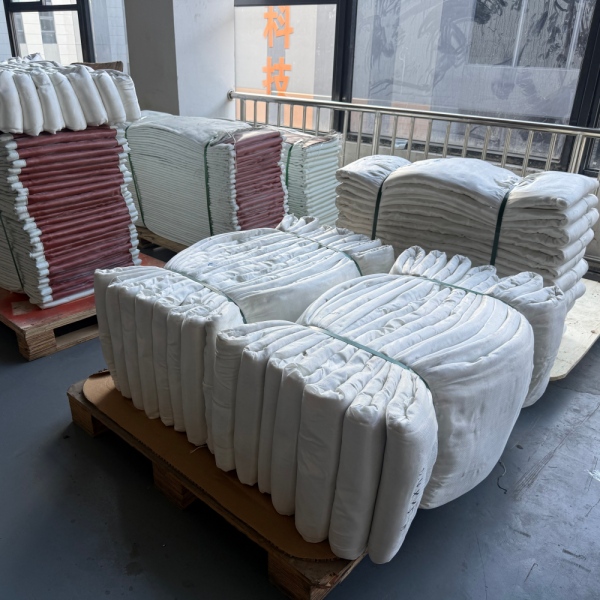
For either metallic or fabric designs, the quality of the engineering recommendation depends heavily on the information supplied.
For a custom fabric joint, BSTFLEX recommends providing:
BSTFLEX manufactures custom non-metallic expansion joints for industrial hot-air, exhaust and flue-gas ducting systems.
Depending on operating conditions, flexible constructions can incorporate technical fabrics, coated fiberglass, PTFE-based sealing layers, high-temperature insulation and protective components.
Round, rectangular and application-specific configurations can be manufactured according to customer drawings and operating data.
See theBSTFLEX Metal İçermeyen Kumaş Genleşme DerziÖzel üretim seçenekleri için.
Eğer uygulamanızda sıcak hava, egzoz gazı veya baca gazı taşıyan büyük bir endüstriyel kanal kullanıyorsanız, değerlendirme için çiziminizi ve çalışma koşullarınızı BSTFLEX'e gönderin.
Kanal boyutlarını, sıcaklığı, basıncı, ortamı, eksenel hareketi, yanal hareketi, yüz yüze uzunluğu ve miktarı dahil edin.

 English
 français
 Deutsch
 русский
 italiano
 español
 português
 Nederlands
 العربية
 日本語
日本語 한국의
한국의 Polski
 Tiếng Việt
 slovenský
 Indonesia