
A custom insulation blanket can only fit as well as the information used to make its pattern. Overall length and diameter are a useful starting point, but they do not show valve stems, flanges, support brackets, cable entries, drain points or the space available for opening the cover.
This guide explains how to collect practical measurements for a removable insulation blanket, which photographs to take and what operating details should accompany the dimensions. It applies to valves, pipes, flanges, filters, drums and other industrial equipment.
For finished custom covers and project manufacturing, visit the custom removable insulation blanket manufacturer page. Existing blanket types can also be reviewed in the removable insulation blankets category.
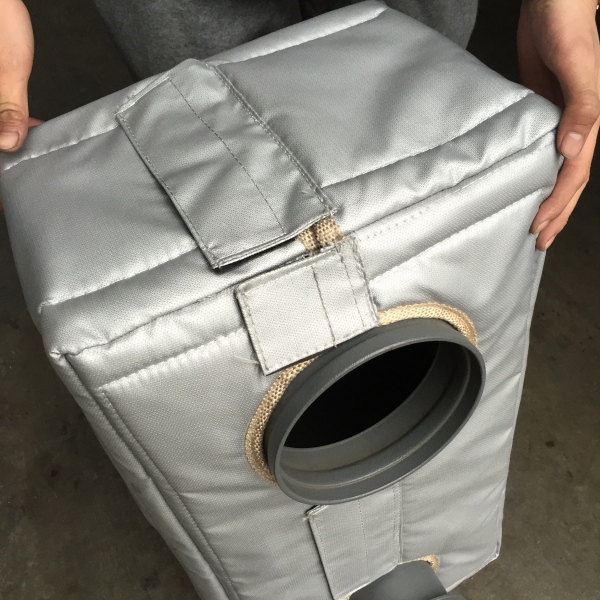
Industrial equipment is rarely a clean cylinder or rectangular box. A valve may have a bonnet, handwheel, actuator, flanges and a drain connection. A filter housing may include a removable lid, pressure gauge, support legs and several nozzles. A drum may have handles, a top opening, an outlet and a heating system.
If only the main diameter and length are supplied, a blanket may cover the hot surface but interfere with operation or maintenance. A usable pattern needs to answer four questions:
The measurement process should therefore begin with the insulation boundary, not with the tape measure.
Decide where the cover starts and stops. Mark these points on a drawing or directly on a photograph. The boundary should be clear around every connection to adjacent pipework, fixed insulation or another removable section.
For a valve, the blanket may cover only the valve body, or it may include both flanges and part of the adjoining pipe. For a filter, it may cover the body while leaving the lid clamp and drain exposed. For a drum, it may be split into a body jacket and a separate lid cover.
When several pieces are required, assign a simple part name or number to each section. This makes it easier to match measurements, drawings and photographs during production.
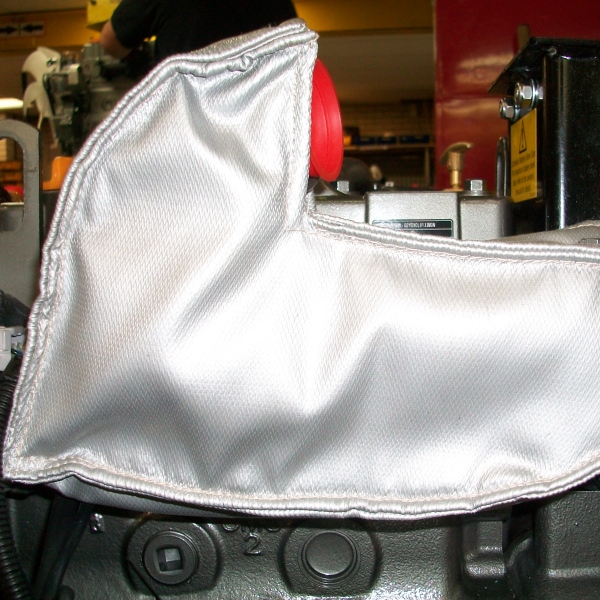
Use millimetres or inches consistently. State the unit on every sheet. Do not mix units in the same dimension table.
| Measurement | What to record | Why it matters |
|---|---|---|
| Overall length | Distance between the two planned blanket edges | Defines the coverage along the equipment or pipe |
| Overall width | Maximum side-to-side dimension inside the insulation boundary | Captures housings, flanges and projections wider than the main body |
| Overall height | Lowest-to-highest dimension, including fixed projections | Helps establish the finished envelope and panel arrangement |
| Outside diameter | Diameter of the bare component at each relevant section | Used for cylindrical bodies, pipes, flanges and vessels |
| Circumference | Measured around the actual surface where the blanket will sit | Useful when a component is not perfectly round or access is limited |
| Connection size | Pipe outside diameter, flange diameter and connection position | Defines openings and the transition to adjacent insulation |
| Clearance | Free space between the equipment and nearby structures | Determines whether the cover can be wrapped, laced and removed |
Measure the bare equipment unless the new blanket will be installed over an existing layer. If another layer will remain in place, state its finished outside diameter and thickness.
A projection is any part that extends through or beyond the main blanket shape. Common examples include valve stems, handles, actuators, gauges, sensors, cables, support brackets, lifting lugs, drains, vents and small branch pipes.
For each projection, record:
Do not describe a projection as simply being on the left or right. The viewing direction may change between photographs. Use a labelled reference, such as the inlet side, outlet side, top centreline or flange face.
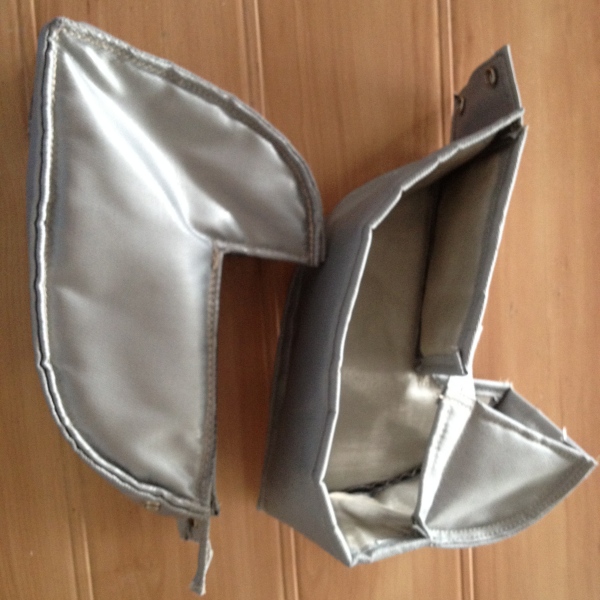
Valve geometry changes according to valve type, pressure class, end connection and actuator arrangement. The nominal pipe or valve size alone does not define the external shape.
For a custom valve jacket, collect the following dimensions:
Clearly state whether the handwheel or actuator must remain outside the insulation. Most valve covers require a shaped opening around the stem or bonnet, but the correct layout depends on the actual equipment.
For examples of finished constructions, see removable valve insulation jackets.
Record the pipe outside diameter and the required insulated length. Note any welds, clamps, supports, identification plates or instruments within the blanket area. If the pipe already has fixed insulation beside the removable section, measure the outside diameter of that insulation so the new cover can meet it correctly.
Record the pipe outside diameter, elbow angle, centreline radius if known and the straight length available at each end. A photograph taken square to the elbow is useful. Where the elbow is close to a wall or another pipe, include the minimum clearance.
Record flange outside diameter, flange thickness, bolt projection and the total face-to-face length of the flange pair. Show whether the blanket should cover only the flanges or also overlap the adjacent pipe insulation.
If a flange needs frequent inspection, identify the preferred opening direction. The closure should be accessible after installation and should not be placed against a wall, floor or neighbouring line.
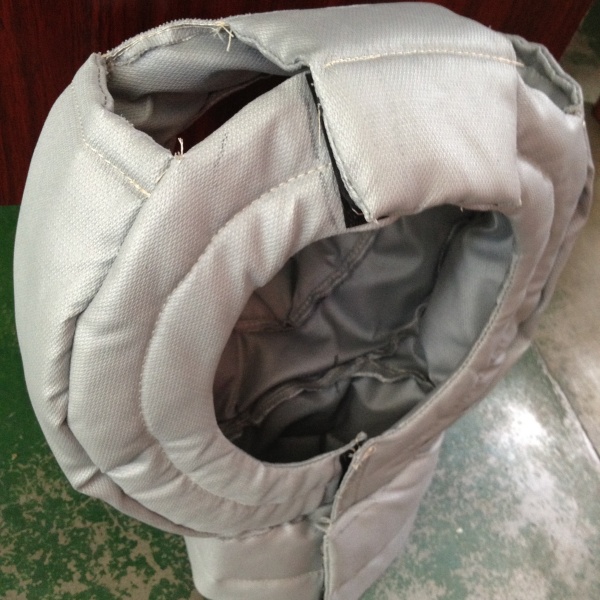
Filters and strainers require regular opening for cleaning or element replacement. The blanket pattern should follow the service method rather than treating the equipment as one closed vessel.
Record the body diameter, body length, lid or cover diameter, lid depth, clamp arrangement, inlet and outlet positions, drain location, pressure gauge position and support details. State which parts are removed during normal maintenance.
For a basket strainer or filter housing, it may be more practical to use a body section and a separate lid section. A Y-strainer may need a shaped piece around the angled branch and drain plug. Photographs should show the equipment both assembled and, where practical, in its normal service-open position.
See the custom removable filter insulation cover page for this product type.
For a cylindrical drum or vessel, record the body diameter or circumference, straight-side height and the shape of the top and bottom. Measure all nozzles, handles, legs, clamps, lifting points, outlets and control components.
State whether the lid opens, lifts off or remains fixed. If the vessel is filled, cleaned or inspected from the top, a separate lid cover may be more practical than one full enclosure. For floor-mounted equipment, measure the gap beneath the vessel and show whether the insulation should stop above the base.
The custom removable drum insulation cover page shows the purchasing route for drum applications.
Photographs help explain geometry that is difficult to describe in a table. They should support the measurements, not replace them.
Take at least the following views:
Place a ruler, tape measure or clearly identified reference object in selected photographs. Keep the camera as square as possible to the surface being shown. Wide-angle images taken very close to the equipment can distort proportions.
Mark measurement letters directly on copies of the photographs. The same letters should appear in the dimension table. For example, A can identify overall length, B the main diameter and C the stem height.
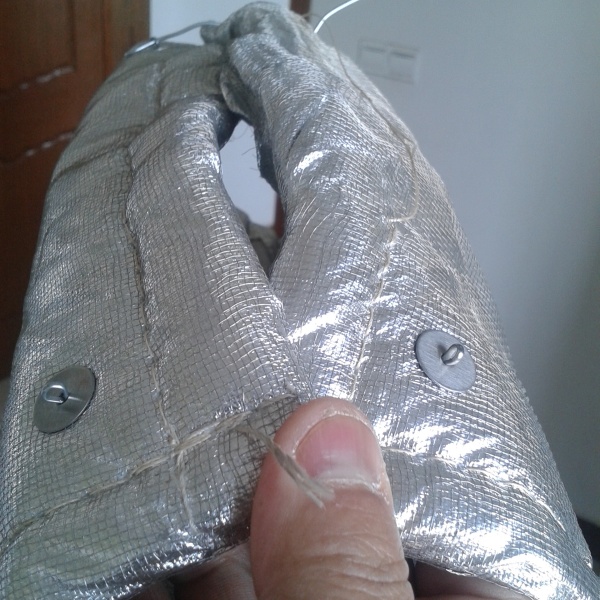
A dimensioned equipment drawing is the best starting point when it represents the installed unit accurately. Highlight the exact insulation boundary and identify any components added after the original drawing was issued.
For flat or moderately complex shapes, a physical template can help define the outline. Use stable sheet material, mark the equipment side and outside side, and identify all cutouts. A sample cover can also be evaluated, but damage, shrinkage or field modifications should be noted so they are not copied unintentionally.
Three-dimensional files may support complex projects, but they do not replace information about maintenance access, closure position and the required insulation boundary.
Provide actual equipment dimensions unless the quotation specifically requests finished blanket dimensions. The blanket manufacturer will normally account for insulation thickness, seam construction, overlap and closure arrangement during pattern development.
If field personnel add their own allowances without identifying them, the same allowance may be added twice. This can produce an oversized cover, misplaced openings or loose closures.
Any tolerance already included in a dimension should be written clearly. For example, identify whether a circumference is the actual metal surface, the outside of existing insulation or the required finished cover circumference.
Dimensions define the shape, but they do not define the construction. Include the following service information with the measurement sheet:
These details help determine the outer fabric, hot-face lining, insulation core, sewing thread and fastening method. Buyers sourcing these components separately can review the existing removable insulation blanket materials guide.
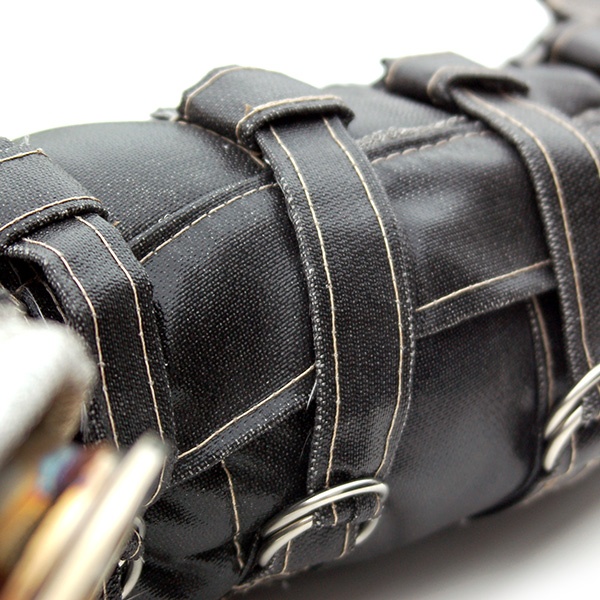
A pattern may fit the equipment but still be difficult to install if the opening direction is wrong. Identify where an installer can stand, reach and pull the cover into place. Show any side that is blocked by a wall, floor, guard or neighbouring component.
For larger equipment, state whether one person or several people will install the blanket. Multi-piece covers should have a clear assembly order and matching identification marks. Where overhead installation is required, weight, lifting access and temporary support may affect the design.
The closure system should remain accessible after the blanket is in position. It should also be kept away from moving parts and should not prevent operation of valves, handles or inspection points.
Nominal size is a system designation and may not equal the measured outside diameter. Record the actual outside diameter or identify the applicable pipe standard and size clearly.
Flanges, bonnets, clamps and brackets often create the maximum dimensions. Measure the full envelope, then record the main body separately.
A cutout size without its location is incomplete. Measure from a fixed edge, flange face or centreline so the opening can be positioned correctly.
A cover needs space to wrap, overlap and close. Record the distance to nearby walls, pipes, platforms and guards.
Photographs from different units can easily be confused. Add the equipment tag, part number or measurement-sheet reference to every image set.
State exactly what was measured. Do not silently add room for insulation, seams or overlap.
Before sending the enquiry, check that the package contains:
When some information is not available, mark it as unknown rather than estimating. BSTFLEX can review the available data and identify which missing dimensions are necessary before pattern approval.
Photographs can support a preliminary review, but dimensions are normally required before production. Include a tape measure or scale in selected images and label the equipment from every relevant angle.
Field measurement should follow the site safety procedure. Record the condition under which the dimensions were taken and identify any meaningful thermal movement or expansion that must be considered.
Either can be useful. Diameter works well for regular round components. Circumference can be more practical for installed equipment or shapes that are not perfectly round. State exactly where the measurement was taken.
Provide actual equipment dimensions and list the required insulation thickness separately. If the blanket will cover existing insulation, provide the finished outside dimensions of that layer.
It may be possible when the external dimensions and interference points are genuinely the same. Compare actual measurements rather than relying only on valve type or nominal size.
Prepare a simple hand sketch with labelled dimensions and combine it with photographs from multiple angles. A clear field sketch is often more useful than an old drawing that does not match the installed equipment.
The opening should be accessible to the installer and should avoid moving parts, leak inspection points and obstructed sides. Show the available working space in the photographs and drawing.
Not for every project. Drawings, measurements and photographs are often sufficient. A sample or template may be useful for complex, irregular or previously modified equipment.
BSTFLEX manufactures custom removable insulation blankets for valves, pipes, flanges, filters, drums, exhaust components and industrial equipment. Send the measurement sheet, photographs, operating temperature, environment and required quantity to sales@pkfiresleeve.com.
For an overview of pattern development, cutting, layer assembly, sewing and final inspection, read how to manufacture a removable insulation blanket.

 English
 français
 Deutsch
 русский
 italiano
 español
 português
 Nederlands
 العربية
 日本語
日本語 한국의
한국의 Polski
 Tiếng Việt
 slovenský
 Indonesia